Prostate Health Supplements: Best Options and Benefits
Top prostate health supplements offer essential nutrients to support urinary function and overall prostate wellness for men seeking natural care options.

We include products we think are useful for our readers. If you buy through links on this page, we may earn a small commission.
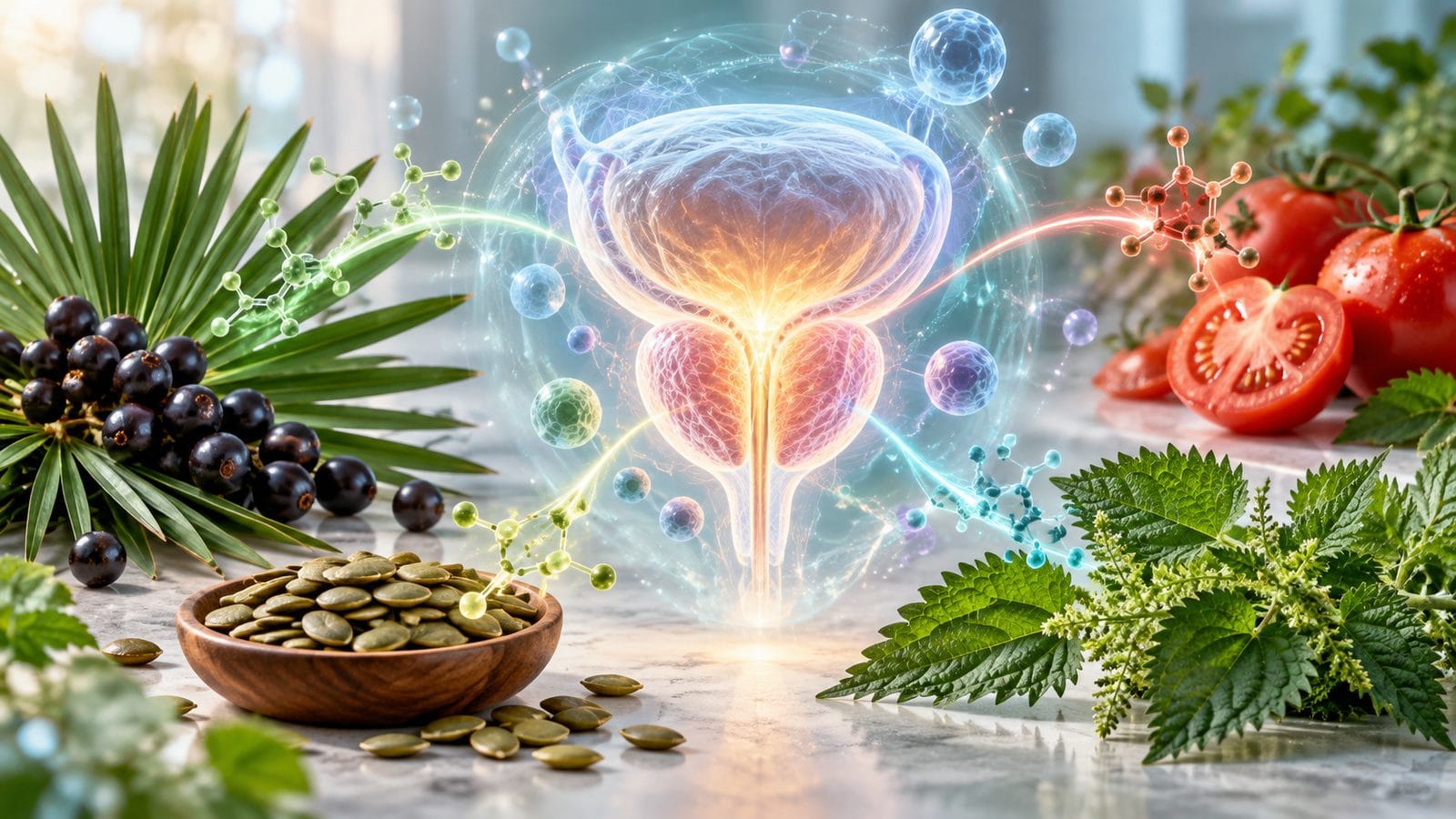
The best prostate supplement is one that targets a clearly identified need, uses standardized ingredients at transparent doses, and has been reviewed for safety alongside your medications and medical history. Some prostate supplements may modestly improve urinary symptoms associated with benign prostatic hyperplasia (BPH), but none has been proven to prevent prostate cancer or replace medical treatment. Saw palmetto, beta-sitosterol, pygeum, rye grass pollen extract, pumpkin seed compounds, and lycopene are among the most popular options, although the quality of evidence varies considerably.
What Prostate Health Supplements Can and Cannot Do | Popular Prostate Supplements and the Evidence Behind Them | Potential Benefits of Prostate Support Supplements | How to Choose the Best Prostate Supplement | Safety, Side Effects, and Drug Interactions | Lifestyle Measures That Complement Prostate Care | A Practical Bottom Line | Frequently Asked Questions
What Prostate Health Supplements Can and Cannot Do
The prostate is a small gland located below the bladder and surrounding part of the urethra. It commonly grows larger with age. This noncancerous growth, known as benign prostatic hyperplasia, can contribute to a weak urine stream, difficulty starting urination, incomplete emptying, urgency, frequent daytime urination, and repeated nighttime bathroom trips. These symptoms are collectively called lower urinary tract symptoms.
Prostate support supplements are generally marketed to improve urinary comfort, support normal urine flow, or promote healthy inflammatory and hormonal signaling. Certain plant extracts contain phytosterols, fatty acids, antioxidants, or other bioactive compounds that could plausibly affect smooth-muscle tone, inflammation, or pathways involved in prostate growth. Biological plausibility, however, is not the same as demonstrated clinical benefit.
Research on supplements for prostate symptoms is mixed. Some ingredients have produced modest improvements in symptom scores or urine flow in short-term trials, while larger and more rigorous studies have found little or no benefit. Differences in extraction methods, ingredient concentrations, product quality, study duration, and participant characteristics make direct comparisons difficult.
It is equally important to understand what these products cannot establish. Urinary symptoms may result from BPH, prostatitis, an overactive bladder, infection, medication effects, diabetes, neurological conditions, or prostate cancer. A supplement cannot diagnose the cause. It also cannot reliably prevent cancer, cure an infection, or reverse a serious urinary obstruction. The National Institute of Diabetes and Digestive and Kidney Diseases identifies watchful waiting, lifestyle measures, prescription medicines, minimally invasive procedures, and surgery—not dietary supplements—as established approaches to BPH management.

Popular Prostate Supplements and the Evidence Behind Them
No ingredient deserves to be called the universal best prostate supplement. A more useful comparison asks whether an ingredient has human clinical evidence, whether the studied preparation matches the product being sold, and whether the possible benefit is meaningful enough to justify its cost and risks.
Saw Palmetto
Saw palmetto is an extract of the berries of Serenoa repens, a palm native to the southeastern United States. It is promoted for urinary symptoms because its fatty acids and phytosterols may interact with inflammatory pathways and the conversion of testosterone to dihydrotestosterone. Earlier small studies generated enthusiasm, but better trials have been disappointing.
According to the National Center for Complementary and Integrative Health, a 2023 review of 27 studies found that saw palmetto used alone provides little or no benefit for BPH symptoms. NIH-supported trials also found no meaningful improvement compared with placebo, even when doses were increased above the usual amount. Saw palmetto is generally well tolerated, but occasional digestive discomfort, headache, or dizziness can occur.
Beta-Sitosterol
Beta-sitosterol is a plant sterol present in nuts, seeds, vegetable oils, and many botanical extracts. Clinical reviews suggest that concentrated beta-sitosterol preparations may modestly improve urinary symptom scores and peak urine flow over several months. It has not been shown to shrink the prostate, and long-term evidence is limited.
Another challenge is product equivalence. “Plant sterols” on a label do not necessarily provide the same quantity or formulation studied in clinical trials. Beta-sitosterol may be a reasonable ingredient to discuss for mild, medically evaluated symptoms, but it should not be presented as a cure.
Pygeum
Pygeum is derived from the bark of the African cherry tree, Prunus africana. Older, generally short-term trials reported small improvements in nighttime urination, urine flow, and the sensation of incomplete emptying. Many studies were limited by inconsistent preparations and dated research methods, so confidence in the size of the benefit remains low.
Pygeum may cause nausea, constipation, diarrhea, or abdominal discomfort. Consumers concerned about sustainability should also look for responsibly sourced material because commercial bark harvesting has placed pressure on wild tree populations.
Rye Grass Pollen Extract
Standardized rye grass pollen extracts contain compounds obtained from several grass pollens. Small studies suggest they may improve overall urinary symptom scores, particularly nighttime frequency and incomplete emptying. The evidence base is considerably smaller than that for prescription BPH medicines, and results from one proprietary extract cannot automatically be applied to every pollen-based formula.
Pumpkin Seed and Pumpkin Seed Oil
Pumpkin seeds supply phytosterols, fatty acids, magnesium, and other nutrients. A few studies have linked pumpkin seed preparations with modest improvements in BPH-related symptoms and quality of life, but the data do not establish an optimal preparation or dose. Whole pumpkin seeds can still be a nutritious food, supplying fiber and unsaturated fat without implying that they are a medical treatment.
Lycopene
Lycopene is a red carotenoid concentrated in cooked tomatoes, watermelon, and pink grapefruit. Laboratory research has explored its antioxidant activity, and observational studies have examined associations between tomato intake and prostate outcomes. Those findings do not prove that lycopene supplements prevent prostate cancer or treat BPH. Food sources are usually the more sensible choice unless a clinician identifies a specific reason to supplement.

Potential Benefits of Prostate Support Supplements
When a well-chosen supplement helps, the improvement is usually modest rather than dramatic. A person might notice fewer nighttime bathroom trips, slightly easier initiation of urination, a stronger stream, or less urgency. Even a small change can improve sleep and daily comfort, but placebo responses are common in studies of urinary symptoms, and symptoms naturally fluctuate.
Some formulations combine ingredients intended to address several mechanisms at once. Phytosterols may influence cell membranes and inflammatory signaling; fatty acids may affect enzymes involved in hormone metabolism; and antioxidants may help protect cells from oxidative stress. Combination formulas sound comprehensive, but they are harder to evaluate. If a product helps or causes an adverse effect, it may be impossible to identify the responsible ingredient.
The most defensible benefit of supplementation is symptom support after serious causes have been excluded—not cancer prevention. Large prevention trials have produced important warnings. Selenium supplementation did not reduce prostate cancer risk in the SELECT trial, according to the NIH Office of Dietary Supplements. High-dose vitamin E is an especially poor choice for routine prostate protection: a large study found that 400 IU per day of synthetic vitamin E was associated with an increased risk of prostate cancer.
Nutrient deficiencies should be corrected for general health, but more is not necessarily better. Zinc, selenium, and vitamin E all have essential physiological roles, yet taking high doses without a demonstrated deficiency can create toxicity or unintended risk. A prostate formula containing a long list of vitamins is not automatically more effective than a simpler, evidence-aligned product.
How to Choose the Best Prostate Supplement
Begin with the symptom and diagnosis rather than the marketing claim. New urinary symptoms deserve a clinical assessment, especially when they are persistent or worsening. A healthcare professional may review medications, perform an examination, order urine or blood tests, discuss prostate-specific antigen testing when appropriate, and determine whether BPH is the likely cause.
Once supplementation is considered reasonable, evaluate products using a consistent checklist:
- Specific ingredients and amounts: Choose a formula that discloses the dose of every active ingredient. Avoid proprietary blends that conceal individual quantities.
- Standardization: Botanical extracts should identify the plant species, plant part, extraction method, and standardized constituents when relevant.
- Independent quality testing: Certification from a credible third-party testing organization can provide additional assurance about identity, strength, and contaminants. It does not prove that the product works.
- Realistic claims: Reject products that promise to cure BPH, prevent cancer, rapidly shrink the prostate, or work for everyone.
- Manageable complexity: A focused formula makes it easier to compare the dose with clinical research and identify side effects.
- Interaction review: Ask a pharmacist or clinician to compare the complete ingredient list with prescription drugs, over-the-counter medicines, and other supplements.
Cost also matters. Prostate supplements are often taken for months, so a small monthly difference can become substantial. Expensive formulas are not necessarily superior, and testimonials cannot substitute for controlled evidence. Compare the actual daily amount of the relevant standardized ingredient rather than the number of capsules or the size of a headline number on a sales page.
If a clinician agrees to a trial, establish a baseline. Record nighttime urination, urgency, stream strength, and feelings of incomplete emptying for a week. Use one product consistently for a defined period, often eight to twelve weeks, unless side effects occur. Stop if there is no meaningful improvement rather than continuing indefinitely out of habit.

Safety, Side Effects, and Drug Interactions
“Natural” does not mean risk-free. Botanical extracts can cause digestive upset, headache, dizziness, allergic reactions, or changes in blood pressure. Multi-ingredient products increase uncertainty because each component may have its own adverse effects and interactions. Manufacturing errors or contamination can add further risk.
Extra caution is appropriate for anyone taking anticoagulants, antiplatelet drugs, blood-pressure medicines, diabetes drugs, hormone therapies, or prescription treatments for BPH. Supplements may amplify side effects, alter absorption or metabolism, or make it harder to judge whether prescribed therapy is working. People preparing for surgery should disclose every supplement because some ingredients may affect bleeding, sedation, or perioperative care.
Saw palmetto does not appear to substantially alter prostate-specific antigen readings, according to NCCIH, but every supplement should still be reported before laboratory testing. Clinicians need the complete picture to interpret results accurately. No supplement should be used to lower or disguise a PSA result, and a normal PSA does not rule out every prostate condition.
Seek prompt medical care for an inability to urinate, blood in the urine, fever with urinary symptoms, severe pelvic or lower-back pain, vomiting, or painful urination accompanied by systemic illness. Unexplained weight loss, bone pain, or rapidly worsening symptoms also require evaluation. These are not situations for self-treatment with supplements for prostate support.
Lifestyle Measures That Complement Prostate Care
For mild BPH symptoms, daily habits may provide more predictable support than a supplement. Limiting fluids for a few hours before bedtime can reduce nighttime urination, although total daytime hydration should remain adequate. Reducing alcohol and caffeine may lessen urgency and frequency because both can irritate the bladder or increase urine production.
Regular physical activity supports metabolic and cardiovascular health and may be associated with a lower risk of troublesome urinary symptoms. A dietary pattern emphasizing vegetables, fruit, legumes, whole grains, fish, and unsaturated fats provides fiber and diverse phytochemicals without the concentrated doses found in pills. Maintaining a comfortable waist circumference may also help because obesity and metabolic dysfunction are associated with more severe lower urinary tract symptoms.
Review nonprescription cold and allergy remedies with a pharmacist. Decongestants can tighten muscles around the bladder outlet, while some antihistamines may impair bladder contraction. Diuretics and other prescription medicines can also influence urinary frequency, but they should never be changed without guidance.
Finally, allow time to empty the bladder and consider “double voiding”—waiting briefly after urinating and trying again—if a clinician recommends it. Avoid holding urine for long periods. These measures do not shrink an enlarged prostate, but they may reduce symptom burden while preserving an accurate view of whether a supplement or medication is contributing anything useful.
A Practical Bottom Line
Among widely used prostate supplements, beta-sitosterol, pygeum, rye grass pollen extract, and some pumpkin seed preparations have limited evidence for modest symptom relief. Saw palmetto is popular and generally tolerated, but rigorous research indicates that it usually performs no better than placebo when taken alone. Lycopene-rich foods can be part of a healthy diet, yet lycopene pills have not been proven to prevent prostate cancer. Selenium and high-dose vitamin E should not be taken for prostate cancer prevention.
The best approach to prostate health combines an accurate diagnosis, realistic expectations, sensible lifestyle measures, and evidence-based medical care. A carefully selected supplement may serve as an optional adjunct for mild symptoms, but it should have a defined goal and stopping point. Transparent labeling, independent quality verification, and professional review are more valuable than dramatic marketing promises.
Frequently Asked Questions
What is the best prostate supplement for frequent urination?
There is no single best option for everyone because frequent urination has many possible causes. Beta-sitosterol, pygeum, and standardized rye grass pollen extracts have shown limited evidence of modest benefit for BPH-related symptoms. Frequent or new symptoms should be medically evaluated before starting a supplement.
How long do prostate supplements take to work?
When improvement occurs, it may take several weeks. An eight-to-twelve-week monitored trial is often enough to determine whether a product produces a meaningful change, although study periods differ. Stop sooner and seek advice if symptoms worsen or adverse effects develop.
Can prostate supplements shrink an enlarged prostate?
Prostate support supplements have not been convincingly shown to produce reliable, clinically important prostate shrinkage. Some may modestly ease urinary symptoms without changing gland size. Prescription 5-alpha-reductase inhibitors can shrink the prostate in appropriate patients, but they require medical supervision.
Can supplements prevent prostate cancer?
No supplement has been proven to prevent prostate cancer. Selenium failed to reduce risk in a major trial, and high-dose vitamin E was associated with increased risk. Age-appropriate medical care, informed discussions about screening, physical activity, and an overall nutritious diet are safer foundations for long-term prostate health.