Whey Isolate vs Concentrate: Protein %, Lactose, Price per Gram
Isolate is about 90% protein with almost no lactose; WPC80 is about 80% with 4–10% lactose. At equal protein doses, muscle results look similar, and isolate is not always the pricier option.

We include products we think are useful for our readers. If you buy through links on this page, we may earn a small commission.
I’m Fred, a marketer—not a doctor or dietitian. AI helps me draft, and I link every research claim to its source so you can check the evidence yourself. The direct answer: whey isolate contains a higher percentage of protein and usually less lactose and fat, while whey concentrate is often, but not always, cheaper per gram of protein. If both provide the same amount of protein, there is little reason to expect meaningfully different muscle-building results.
The short answer
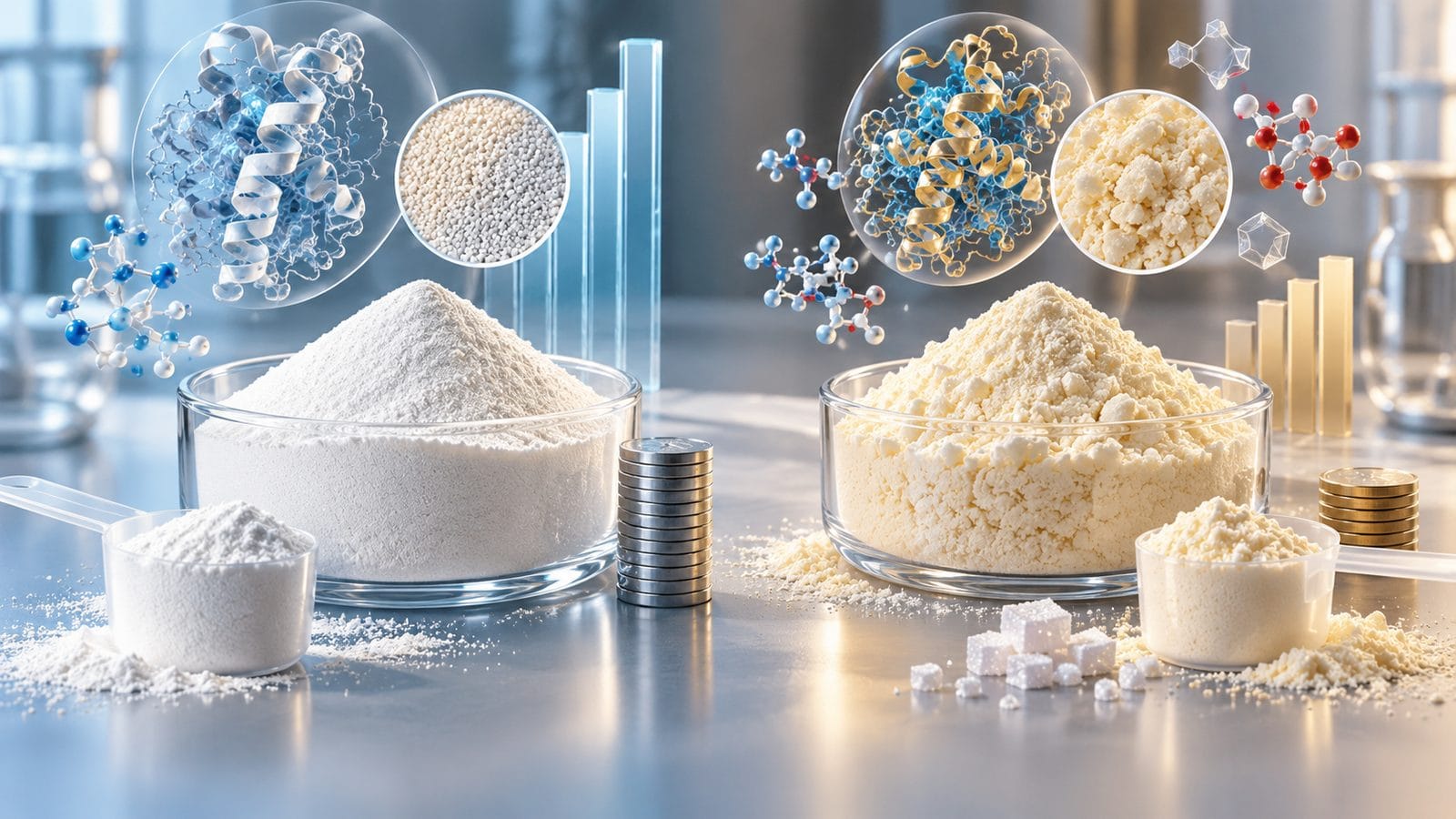
- Whey isolate is more protein-dense: the ingredient is typically 90–92% protein on a dry basis, compared with about 80% for WPC80, the concentrate most sports powders are made from (ADPI whey protein isolate standard, ADPI whey protein concentrate standard).
- Isolate contains less lactose and fat because it undergoes additional filtration: industry specifications list typically 0.5–1% lactose and 0.5–1% fat for isolate, against 4–10% lactose and 4–8% fat for WPC80. That can make it the better starting point for someone who is sensitive to lactose or wants fewer non-protein calories.
- Concentrate is often sold as the value choice, but check the math. In the five unflavored powders compared below, the cheapest per 25 grams of protein was an isolate. Compare products by cost per 25 grams of protein, not by container price, serving price or scoop size.
- Results should be similar at matched protein doses. Both are complete whey proteins. Research supports protein supplementation alongside resistance training, but it does not establish that ordinary whey isolate builds more muscle than concentrate when protein intake is equal.
- Choose from the label, not the front of the package. Check protein percentage, carbohydrate and fat, ingredients, sweeteners, allergen information and independent certification.
Whey protein isolate vs concentrate at a glance
| Feature | Whey protein concentrate | Whey protein isolate |
|---|---|---|
| How it is made | Whey is filtered and dried, with some lactose, fat and minerals remaining. | Whey receives additional filtration to remove more lactose, fat and other non-protein material. |
| Typical protein concentration | Sports powders usually use WPC80: typically 80–82% protein on a dry basis. The legal category starts at 25% protein (21 CFR 184.1979c), and WPC34 (about 34–36%) is common in foods. | Typically 90–92% protein on a dry basis; the industry standard sets 89.5% as the minimum. |
| Protein by weight of the finished powder | 73–76% in the two unflavored concentrates below (24–25 g of protein per 33 g scoop). | 86–87% in the three unflavored isolates below (24–30 g of protein per 28–35 g scoop). |
| Lactose | WPC80 typically contains 4–10% lactose, roughly 1–3 g per 25 g of protein; lower-protein concentrates contain far more. | Typically 0.5–1% lactose, roughly 0.1–0.3 g per 25 g of protein, but “isolate” does not automatically mean certified lactose-free. |
| Fat | WPC80 typically 4–8%; the concentrates below list 2–2.5 g per serving. | Typically 0.5–1%; the isolates below list 0–0.5 g per serving. |
| Calories per gram of protein | A little higher: 4.8–5.4 kcal per gram of protein in the concentrates below. | A little lower: 4.3–4.6 kcal per gram of protein in the isolates below. |
| Price per 25 g protein | Often lower, but not always: $1.53–$1.74 for the concentrates below. | Often higher because of extra processing, yet $1.33–$1.72 for the isolates below. |
| Best fit | Budget-conscious buyers who tolerate dairy carbohydrates well. | People prioritizing protein density, minimal lactose or tight control of carbohydrate and fat. |
Ingredient figures come from the ADPI whey protein concentrate standard and ADPI whey protein isolate standard; finished-powder figures come from the Nutrition Facts panels of the products compared below, read on 3 November 2026.
The words whey protein and whey isolate are not opposites. Isolate is one form of whey protein. When someone compares “whey protein vs isolate,” the first product is often a concentrate or a concentrate-isolate blend, even if the front label does not make that obvious.
For a broader explanation of concentrates, isolates, hydrolysates and plant-based alternatives, see how protein powder is made and how to choose.
What processing changes—and what it does not
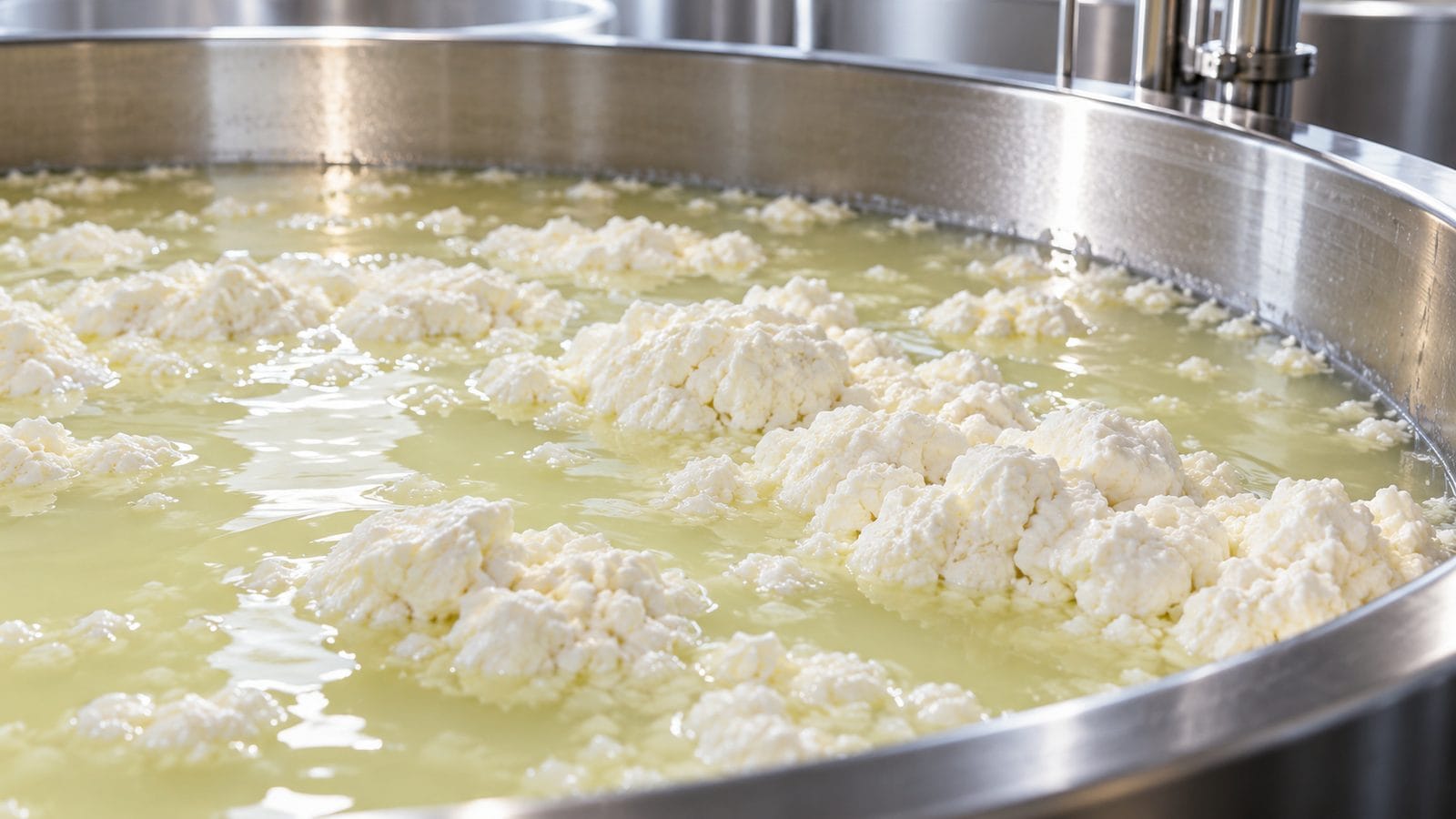
Whey is the liquid portion separated from curds during cheese production. It contains water, whey proteins, lactose, minerals and a small amount of fat. Manufacturers remove water and use membrane filtration or related separation methods to concentrate the protein. A classic review by Morr et al., Critical Reviews in Food Science and Nutrition, 1993 describes the fractionation methods and functional properties behind whey protein concentrates and isolates.
Concentrate is not simply “unfinished isolate.” Whey protein concentrate is a category covering ingredients with different protein concentrations. The sports-supplement ingredient commonly called WPC80 is near the high end of that category, while other concentrates can contain substantially less protein and more lactose.
To make isolate, manufacturers filter the whey further. Depending on the process, this may involve microfiltration, ultrafiltration, ion exchange or a combination of separation steps. The practical result is a powder with a greater proportion of protein and smaller proportions of lactose, fat and minerals.
That extra filtration does not turn isolate into a fundamentally different protein source. Both forms retain whey’s essential amino acids, including leucine. Processing can change the relative abundance or structure of individual protein fractions, but claims that one filtration method is universally “cleaner,” “more anabolic” or “more bioavailable” need stronger evidence than marketing language.
Hydrolyzed whey is a separate distinction. Hydrolysis partially breaks proteins into smaller peptides and may be applied to concentrate or isolate. It can alter digestion speed, taste and price, but it should not be confused with the concentrate-versus-isolate question. In one randomized trial, hydrolyzed and intact whey produced similar overall increases in muscle protein synthesis, although some timing measures differed: Moro et al., Journal of Nutrition, 2019.

Protein percentage, lactose and fat per serving
The ingredient’s protein percentage and the finished powder’s protein percentage are not necessarily the same. Flavoring, cocoa, gums, lecithin, salt, enzymes and sweeteners add weight without adding much protein. A product made with isolate can therefore have a less impressive protein-to-serving ratio than a simple unflavored concentrate.
You can calculate the finished powder’s protein percentage from the label:
Protein percentage = grams of protein per serving ÷ serving size in grams × 100.
For example, a hypothetical 32-gram serving containing 24 grams of protein is 75% protein by weight. A hypothetical 29-gram serving containing 25 grams is about 86% protein. These calculations describe the complete powder in the package, not the purity of its underlying whey ingredient.
Use this calculation when comparing whey protein concentrate vs isolate because scoop size is a poor shortcut. Scoops differ in volume, powder density and how full the manufacturer expects them to be. The FDA’s nutrition-label guidance explains that nutrient amounts are declared per serving; those gram values are more useful here than scoop appearance or front-label claims.
Lactose
Concentrate retains more of whey’s natural lactose, while isolate generally contains much less. Exact amounts depend on the raw ingredient, filtration process, flavor system and serving size. Some labels declare total carbohydrate without separating lactose, so a consumer may not be able to calculate the lactose dose from the panel alone.
Lactose intolerance is caused by difficulty digesting lactose, not by the whey protein itself. Symptoms and individual thresholds vary, according to the National Institute of Diabetes and Digestive and Kidney Diseases. Someone who tolerates yogurt or small quantities of milk may be comfortable with concentrate, while someone who reacts to small lactose doses may prefer an isolate specifically documented as lactose-free or a non-dairy option from our guide to the best lactose-free protein powder.
Low lactose is not the same as safe for a milk allergy. Both concentrate and isolate contain milk proteins and should be avoided by anyone with a milk-protein allergy unless a qualified clinician says otherwise.
Fat and calories
Concentrate generally supplies a little more fat and carbohydrate per equal protein dose. In the context of an entire diet, the difference is often modest. It becomes more relevant when someone needs the most protein from the fewest calories, uses multiple servings daily or carefully tracks carbohydrate and fat.
An isolate is not automatically the simpler formula. A heavily flavored isolate may contain a longer ingredient list than an unflavored concentrate. Check the entire label if you care about gums, sugar alcohols, artificial or high-intensity sweeteners, flavors, sunflower or soy lecithin, and digestive enzymes.
How to compare price per 25 grams of protein
Container price alone rewards large packages, and price per serving can be distorted by serving size. Price per 25 grams of actual protein is a fairer comparison between protein isolate vs concentrate.
Use these steps:
- Multiply protein per serving by the number of servings to find total grams of protein in the package.
- Divide the package price by total grams of protein.
- Multiply the result by 25.
Formula: package price ÷ (protein per serving × servings per package) × 25.
Imagine one powder provides 24 grams of protein across 30 servings and another provides 25 grams across 28 servings. Their containers hold 720 and 700 grams of protein, respectively. Divide each current price by its total protein and multiply by 25. This avoids assuming that the package with more powder, more servings or a lower sticker price delivers better protein value.
Also compare like with like. An independently certified powder may reasonably cost more than one without certification. Flavor systems and specialty claims can affect price without changing the protein dose. Shipping, subscriptions and temporary discounts can also reverse the result, which is why a fixed claim that concentrate is always cheaper would be too strong.
Does isolate produce better muscle or strength results?
The evidence supports a more restrained conclusion: sufficient high-quality protein can help resistance-training adaptations, but isolate has not been shown to deliver meaningfully better long-term results than concentrate at equal protein doses.
A large systematic review found that protein supplementation can modestly improve gains in muscle mass and strength during prolonged resistance training, particularly when total protein intake would otherwise be inadequate: Morton et al., British Journal of Sports Medicine, 2018. That analysis supports protein supplementation as a category; it does not prove that isolate outperforms concentrate.
Acute feeding studies help explain why whey is useful. In young men, muscle protein synthesis increased with progressively larger protein doses after resistance exercise and reached a plateau in that particular experiment at 20 grams: Moore et al., American Journal of Clinical Nutrition, 2009. That result is not a universal prescription—body size, age, meal composition and training matter—but it shows why the protein dose deserves more attention than the word “isolate.”
Research comparing whey with other protein sources also shows that digestion rate and amino-acid composition can affect short-term responses. Tang et al., Journal of Applied Physiology, 2009 found a greater acute muscle-protein-synthesis response to whey hydrolysate than to casein or soy under the study conditions. Again, this was not a whey isolate versus concentrate trial.
One useful comparison found that a high-leucine native whey produced a larger rise in blood leucine than regular WPC80 but was not superior to WPC80 for post-exercise muscle protein synthesis over the measured period: Hamarsland et al., Journal of the International Society of Sports Nutrition, 2017. This does not prove every concentrate equals every isolate, but it argues against assuming that a more specialized whey automatically produces a better anabolic outcome.
Long-term results depend more on total dietary protein, training quality, energy intake, consistency and adequate recovery. Isolate’s genuine advantages are compositional—more protein per gram, less lactose and usually less fat—not a demonstrated special ability to build muscle from the same protein dose.
Five unflavored whey powders compared
Two same-brand pairs and one more isolate, all unflavored 5 lb tubs sold on iHerb US, so the numbers show the ingredient rather than a flavor system. Label values and one-time prices were read on 3 November 2026; price per 25 g of protein = price / (servings x protein per serving) x 25. Sugars in an unflavored whey are mostly lactose, so that column is the closest the label gets to a lactose figure. The iHerb page is the final word on price.
| Powder (unflavored, 5 lb) | Type | Scoop | Protein | Protein by weight | Fat | Carbs | Sugars | Price per 25 g protein | Certification |
|---|---|---|---|---|---|---|---|---|---|
| NOW Sports Whey Protein Concentrate | concentrate | 33 g | 24 g | 73% | 2 g | 3 g | 1 g | $1.53 | Informed Sport |
| NOW Sports Whey Protein Isolate | isolate | 28 g | 24 g | 86% | 0 g | 1 g | 0 g | $1.72 | Informed Sport |
| Nutricost Grass-Fed Whey Protein Concentrate | concentrate | 33 g | 25 g | 76% | 2.5 g | 1 g | 1 g | $1.74 | none found |
| Nutricost Grass-Fed Whey Protein Isolate | isolate | 35 g | 30 g | 86% | 0.5 g | 1 g | 1 g | $1.63 | none found |
| California Gold Nutrition Sport Whey Protein Isolate | isolate | 31 g | 27 g | 87% | 0 g | 0 g | 0 g | $1.33 | none found |
Two things stand out. Within each brand the isolate carries more protein per gram of powder, less fat and as little or less sugar, exactly as the specifications predict. Price is a different story: the isolates ran from $1.33 to $1.72 per 25 g of protein and the concentrates from $1.53 to $1.74, so neither type was reliably cheaper.
NOW Sports Whey Protein Concentrate, unflavored
24 g of protein, 2 g of fat and 3 g of carbohydrate (1 g of sugars) per 33 g scoop; ingredients are whey protein concentrate and under 1% sunflower lecithin. The label lists 2,472 mg of leucine per serving. The product line is listed in the Informed Sport database, which matters if you are drug-tested; check the batch number on your tub. One-time iHerb US price $101.62 for about 69 servings, which works out to $1.53 per 25 g of protein. See it on iHerb
NOW Sports Whey Protein Isolate, unflavored
24 g of protein, 0 g of fat and 1 g of carbohydrate (0 g of sugars) per 28 g scoop; the same two-ingredient formula with isolate in place of concentrate, and 2,495 mg of leucine per serving. Also listed in Informed Sport. Next to its concentrate sibling it shows the trade-off plainly: less lactose and fat, about 12% more per 25 g of protein. One-time iHerb US price $134.01 for about 81 servings, which works out to $1.72 per 25 g of protein. See it on iHerb
Nutricost Grass-Fed Whey Protein Concentrate, unflavored
25 g of protein, 2.5 g of fat and 1 g of carbohydrate (1 g of sugars) per 33 g scoop, from grass-fed whey concentrate with sunflower lecithin. We found no listing in the Informed Sport or NSF Certified for Sport databases. One-time iHerb US price $119.95 for about 69 servings, which works out to $1.74 per 25 g of protein. See it on iHerb
Nutricost Grass-Fed Whey Protein Isolate, unflavored
30 g of protein, 0.5 g of fat and 1 g of carbohydrate (1 g of sugars) per 35 g scoop. In this pair the isolate is cheaper per 25 g of protein than the brand’s own concentrate. No listing found in the Informed Sport or NSF Certified for Sport databases. One-time iHerb US price $126.95 for about 65 servings, which works out to $1.63 per 25 g of protein. See it on iHerb
California Gold Nutrition Sport Whey Protein Isolate, unflavored
27 g of protein with 0 g of fat and 0 g of carbohydrate per 31 g scoop, from whey protein isolate and sunflower lecithin. The lowest price per 25 g of protein of the five. No listing found in the Informed Sport or NSF Certified for Sport databases; the iHerb page shows a third-party testing badge, which is not the same as a certifier database listing. One-time iHerb US price $105.00 for about 73 servings, which works out to $1.33 per 25 g of protein. See it on iHerb
Who should choose concentrate, isolate or another protein?
| Your priority | Likely starting choice | Reason |
|---|---|---|
| Lowest cost per 25 g protein | Whichever is cheaper per 25 g | Concentrate is often cheaper, but prices overlap; calculate it for the products you are considering. |
| Maximum protein density | Isolate | More of each gram of powder is protein. |
| Lactose sensitivity | Documented low-lactose or lactose-free isolate | Additional filtration generally removes more lactose, but the label still needs checking. |
| Milk-protein allergy or vegan diet | Non-dairy protein | Neither whey form is appropriate because both come from milk. |
| Shortest ingredient list | Unflavored concentrate or isolate | The finished formulation matters more than the whey category. |
| Drug-tested sport | Certified concentrate or isolate | Certification is more relevant than concentrate versus isolate for reducing banned-substance risk. |
Pick concentrate if you digest it comfortably, want a complete whey protein and it costs less per 25 g of protein than the isolates you are considering. For many healthy adults, a straightforward concentrate is enough.
Pick isolate if you want more protein relative to serving weight, need to minimize lactose, or want very little carbohydrate and fat. Our guide to the best whey protein isolate explains what to check when comparing isolate formulas without assuming that the most expensive option is best.
Pick another protein if whey does not suit your diet or digestion. A milk allergy calls for avoiding whey rather than simply switching to isolate. People following a plant-based diet can compare the best vegan protein powders.
For either whey type, review the Supplement Facts panel, full ingredient list and allergen statement. If independent verification matters, look for a current searchable listing from NSF Certified for Sport or Informed Sport. Clean Label Project certification can provide another check related to contaminant screening, but certification programs use different standards and should not be treated as interchangeable.
Neither form is necessary if food already covers your needs. A powder is a convenient source of protein, not a requirement and not a treatment. For possible digestive issues and other cautions, see our overview of whey protein side effects. Anyone who is pregnant, choosing a supplement for a child or living with kidney disease should ask a doctor before using protein supplements.
What to check on a whey label
- Protein per serving: use the stated grams, not the scoop count or a percentage printed on the front.
- Serving weight: calculate protein grams divided by serving grams to compare protein density.
- Total carbohydrate and fat: these provide clues about how lean the finished formula is, although total carbohydrate does not reveal the exact lactose amount.
- Ingredient order: ingredients are listed by weight. A blend may place concentrate before isolate even when “isolate” is emphasized elsewhere.
- Sweeteners and flavors: choose according to your preferences and tolerance rather than assuming “natural” means simpler or safer.
- Milk allergen statement: both isolate and concentrate are milk-derived.
- Certification status: verify the exact product and flavor in the certifier’s database; do not rely only on a logo shown in a marketplace image.
- Cost per 25 g protein: recalculate whenever the price or serving count changes.
The best choice is therefore less dramatic than many whey vs isolate protein comparisons suggest. Concentrate is often marketed as the economical default, but price per 25 g of protein should settle that. Isolate earns its premium when lower lactose, lower non-protein calories or higher protein density solves a real problem for you.
Frequently Asked Questions
Is whey protein the same as whey isolate?
Whey isolate is a type of whey protein. “Whey protein” is the broader category, which includes concentrate, isolate and hydrolyzed whey. If a product is labeled only as whey protein, read the ingredient list to determine which form or blend it contains.
Is whey isolate lactose-free?
Not automatically. Isolate is usually very low in lactose because additional filtration removes much of it, but residual amounts and finished formulas vary. If you need strict avoidance, look for an explicit lactose-free claim backed by the manufacturer or choose a verified non-dairy alternative. Whey isolate is not suitable for a milk-protein allergy.
Is isolate protein better than whey concentrate for muscle gain?
Not when equal amounts of comparable-quality protein are consumed and tolerated. Isolate makes it easier to obtain protein with fewer grams of lactose, carbohydrate and fat, but current evidence does not show a meaningful muscle-building advantage over concentrate solely because it is isolate. Training and total protein intake matter more.
Is whey concentrate or isolate better for weight loss?
Neither causes weight loss by itself. Isolate usually provides slightly fewer non-protein calories for the same protein dose, which may make calorie tracking easier. Concentrate can still fit a calorie-controlled diet and may offer better value. Choose based on the complete label, portion size, overall diet and tolerance rather than expecting either form to produce weight loss.