Best Protein Powder for Seniors (60+, 70+): What to Look For
Protein powder for seniors: how much protein older adults need, why leucine matters, kidney notes, and 5 options on iHerb with verified certifications.

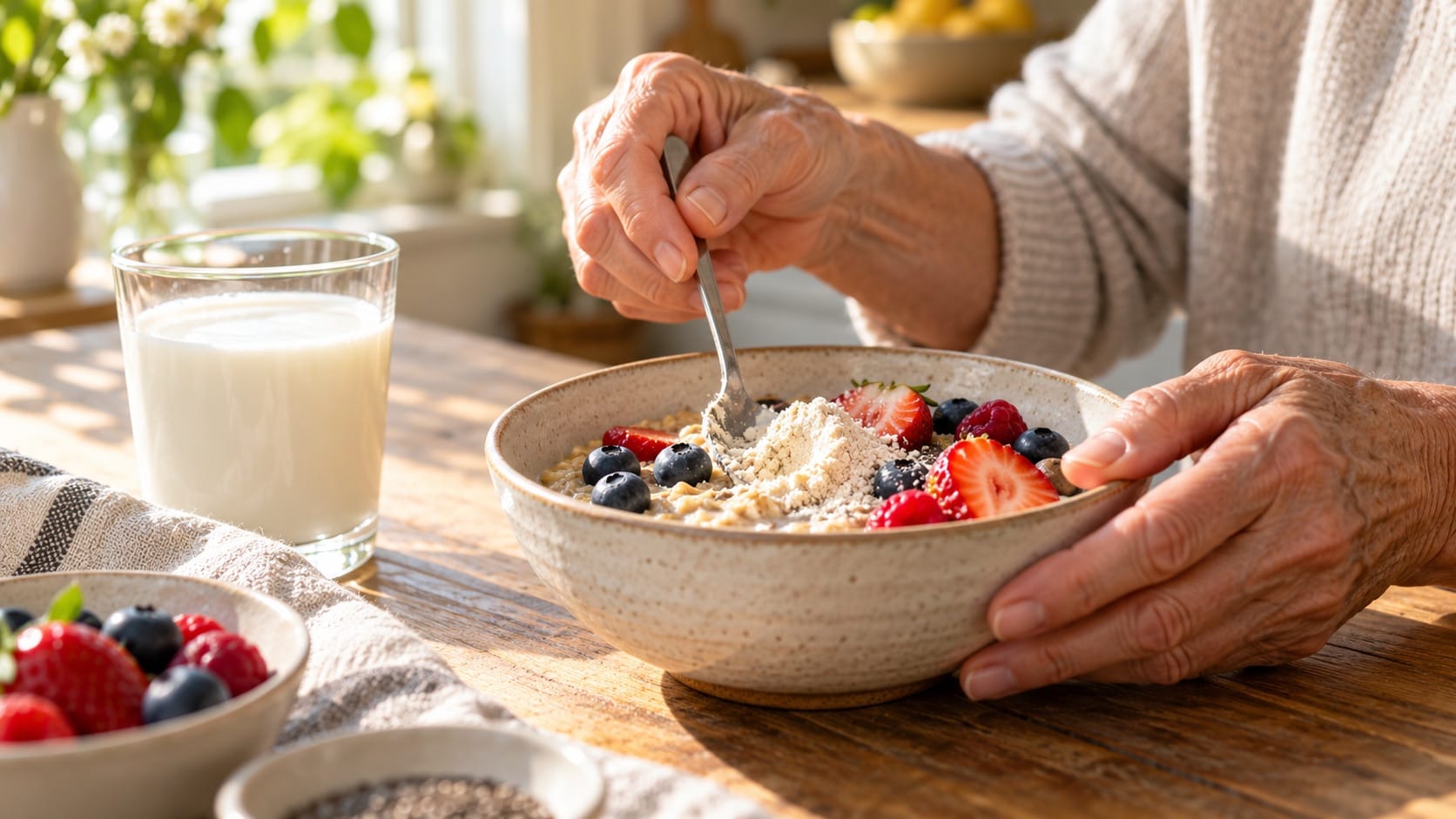
We include products we think are useful for our readers. If you buy through links on this page, we may earn a small commission.
I am Fred, a marketer, not a doctor or dietitian, and I did not try these products. After 60, keeping muscle gets harder, and many people eat less protein just as they need more. A protein powder is one easy way to close the gap. This page explains how much protein older adults need, what to look for in a powder, and compares five options sold on iHerb by protein, leucine, price and certifications that appear in the certifier's own database. AI helps me draft; every claim links to its source. Prices checked 20–28 October 2026, iHerb US.
The short answer
- How much protein: at least 1.0–1.2 g per kg of body weight a day for people over 65, more if active or ill (PROT-AGE Study Group, Bauer et al., 2013). For a 70 kg person that is about 70–85 g a day.
- Per meal: older muscles need a bigger dose to respond, about 0.4 g per kg in one meal, versus about 0.24 g per kg in young men (Moore et al., Journals of Gerontology, 2015). For 70 kg that is roughly 28 g of protein at a time.
- Which type: whey, because it is complete and rich in leucine. Not collagen, which does little for muscle (Oikawa et al., 2020).
- Best overall: Garden of Life Sport Certified Grass Fed Whey — the most leucine per scoop here (2.8 g), NSF Certified for Sport (confirmed).
- Kidneys: no harm found in healthy adults (Devries et al., Journal of Nutrition, 2018); if you have kidney disease, talk to your doctor first (PROT-AGE Study Group, Bauer et al., 2013).
Why protein needs go up with age
An international group of geriatric experts, the PROT-AGE Study Group, concluded that older adults need more protein than younger adults, because the body responds less to each meal and because illness and inflammation increase needs. They recommend at least 1.0–1.2 g of protein per kg of body weight a day for people over 65, at least 1.2 g for those who exercise, and 1.2–1.5 g for most older people with acute or chronic disease. People with severe kidney disease who are not on dialysis are the exception and may need to limit protein (PROT-AGE Study Group, Bauer et al., 2013).
Older muscle is also less sensitive to small doses. Pooling data from their labs, researchers found that muscle protein synthesis in men around 71 years old plateaued at about 0.40 g of protein per kg of body weight in one meal, compared with 0.24 g per kg in men around 22 (Moore et al., Journals of Gerontology, 2015). In practice, a breakfast of toast and coffee with 10 g of protein does little for muscle; adding a scoop of protein brings it closer to the target.
Exercise matters as much as protein. In a meta-analysis of 49 trials, protein supplements added to strength training gains, but the extra benefit was smaller with increasing age (Morton et al., British Journal of Sports Medicine, 2018). Protein works best together with some form of resistance exercise.
What to look for in a protein powder after 60
- Leucine. The ISSN suggests 700–3,000 mg of leucine per serving to switch on muscle building (ISSN position stand, 2017). Whey reaches the upper part of that range in one scoop; collagen does not.
- Enough protein per scoop to reach about 25–30 g per meal together with food.
- A certification you can verify, especially if you take medications and want to be sure nothing unlisted is inside.
- Low lead. Consumer Reports found plant-based protein products averaged about nine times as much lead as dairy-based ones (Consumer Reports, Oct 2025, updated Jan 2026); for daily long-term use, that favors whey.
- Easy to use. Unflavored powder can be stirred into oatmeal, yogurt, soup or mashed potatoes, which helps when appetite is small.
- Few added ingredients, if you are sensitive to sweeteners or lactose; isolates have the least lactose (whey protein side effects).
5 options compared
| Product | Type | Protein per scoop | Leucine per scoop | Price per 25 g protein | Certification verified in certifier database |
|---|---|---|---|---|---|
| Garden of Life Sport Certified Grass Fed Whey | Whey isolate + milk protein | 24 g | 2.8 g | $2.19 | NSF Certified for Sport |
| NOW Foods NOW Sports Whey Protein Isolate | Whey isolate, unflavored | 24 g | not stated | $1.55 | Informed Sport |
| Optimum Nutrition Gold Standard 100% Whey | Whey blend | 24 g | not stated | $2.33 | NSF Certified for Sport |
| Thorne Whey Protein Isolate | Whey isolate | 21 g | 2.2 g | $2.58 | NSF Certified for Sport |
| NOW Foods NOW Sports Pea Protein | Pea protein, unflavored | 24 g | 2.0 g | $0.91 | Informed Sport |
"—" means I found no certification in a certifier's database, or could not confirm it. Leucine is shown only where the label lists it. Price per 25 g of protein = price ÷ (servings × grams of protein per serving) × 25.
The picks, one by one
Best overall: Garden of Life Sport Certified Grass Fed Whey
24 g protein per scoop · leucine 2.8 g · $2.19 per 25 g of protein
The most leucine per scoop among the products I compared, from a blend of whey isolate and milk protein, NSF Certified for Sport (confirmed in the NSF database), sweetened with stevia.
What to keep in mind: Flavored (vanilla). Not part of the Consumer Reports lead test.
Unflavored, to mix into food: NOW Sports Whey Protein Isolate, unflavored
24 g protein per scoop · leucine not stated · $1.55 per 25 g of protein
Whey isolate and 1% lecithin, no sweetener, low in lactose, Informed Sport listed (confirmed). Stirs into oatmeal, yogurt or soup without changing the taste much.
What to keep in mind: The label on iHerb does not list leucine. Informed Sport tests for banned substances, not heavy metals.
Familiar and certified: Optimum Nutrition Gold Standard 100% Whey
24 g protein per scoop · leucine not stated · $2.33 per 25 g of protein
Widely sold, NSF Certified for Sport (confirmed), easy to mix.
What to keep in mind: Consumer Reports measured lead in the chocolate version at 56% of its daily level of concern per serving (Consumer Reports, Oct 2025, updated Jan 2026). Sweetened with acesulfame potassium.
Dairy-free: NOW Foods NOW Sports Pea Protein
24 g protein per scoop · leucine 2.0 g · $0.91 per 25 g of protein
Single-ingredient pea protein, unflavored, the cheapest per gram of anything I compared, Informed Sport listed (confirmed in the Informed Sport database).
What to keep in mind: Plant proteins tend to carry more lead than dairy; this product was not in the Consumer Reports test. Slightly less leucine than whey.
Thorne Whey Protein Isolate is also NSF Certified for Sport with 2.2 g of leucine, but its iHerb page carries a Prop 65 warning for lead, so I did not pick it.
Practical tips
- Add protein to the smallest meal of the day, often breakfast, rather than to dinner.
- Stir unflavored powder into foods you already eat if shakes feel too filling.
- Combine with resistance exercise, even simple chair stands or bands, two or three times a week.
- Drink enough fluid, and start with half a scoop if your stomach is sensitive.
- Ask your doctor first if you have kidney disease, take several medications, or have been told to limit protein.
More comparisons: best whey protein isolate, best protein powder for women, best vegan protein powders. Why collagen is not a muscle protein: collagen vs whey.
Frequently asked questions
What is the best protein powder for seniors over 70?
A whey-based powder with a verifiable certification and plenty of leucine; in this comparison, Garden of Life Sport Certified Grass Fed Whey. The per-meal target of about 0.4 g of protein per kg comes from studies in men around 71 (Moore et al., Journals of Gerontology, 2015).
Is protein powder safe for older adults?
For healthy older adults, higher protein intakes did not harm kidney function in trials (Devries et al., Journal of Nutrition, 2018). People with severe kidney disease may need to limit protein (PROT-AGE Study Group, Bauer et al., 2013).
Should seniors take collagen for muscle?
No. In older women, whey raised muscle protein synthesis and collagen did not (Oikawa et al., 2020).
Can protein powder replace a meal?
Not on its own; it lacks the fiber, vitamins and energy of a full meal. Use it to raise the protein in meals you already eat.