Does Protein Powder Expire? Shelf Life and Signs It Went Bad
Does protein powder go bad? What the best-by date means, how long whey keeps its quality in a storage study, signs it has gone bad, and how to store it.

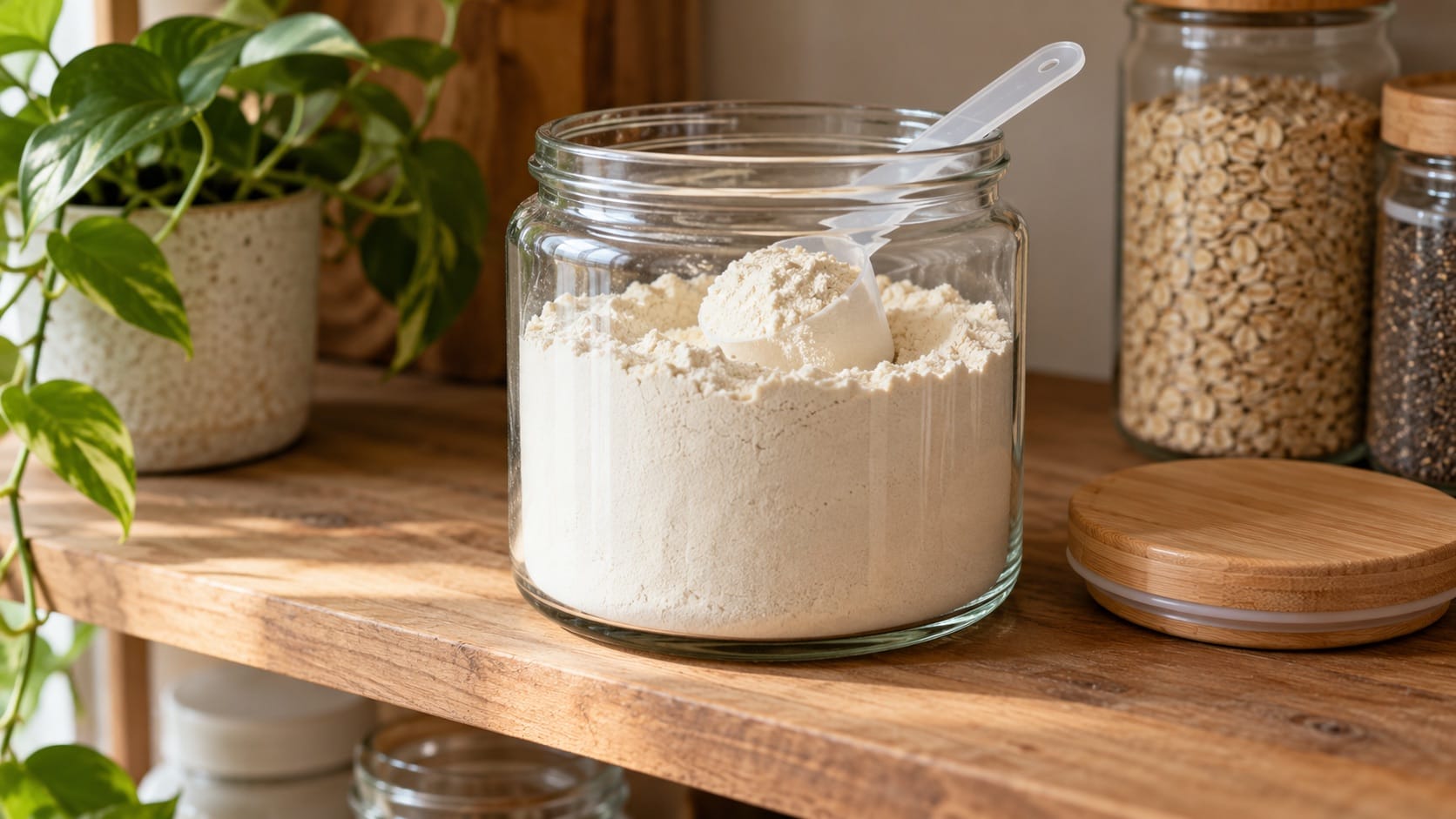
I am Fred, a marketer, not a doctor or dietitian. Protein powder does go bad, but slowly, and usually in taste and texture before anything else. This page explains what the date on the tub means, what a storage study found for whey, how to tell a powder has gone off, and how to store it. AI helps me draft; every claim links to its source. Checked on 28 October 2026.
The short answer
- Does protein powder expire? It loses quality over time. The date on the tub is usually a "best by" date about quality, not a safety cutoff.
- How long is it good for? A storage study found whey protein kept its best flavor for about 12–15 months at room temperature, or 8–12 months for "instantized" powders (Wright et al., Journal of Food Science, 2009). Best-by dates on current listings run two to three years from now.
- Is expired protein powder safe? If it has been kept dry and closed and looks and smells normal, a powder slightly past its date is unlikely to be harmful; it may taste stale and mix worse.
- When to throw it out: if it smells rancid, sour or like cardboard, has hard lumps or damp patches, shows mold, or changed color.
What the date on the tub means
In the US, product dating is not required by federal regulations except for infant formula. Manufacturers add dates to show when a product will be at its best quality; except for infant formula, these dates are not an indicator of safety, according to the USDA Food Safety and Inspection Service. That guidance is written for foods in general, but the logic is the same for a dry protein powder: the date marks the end of guaranteed flavor and quality.
For a sense of scale, these are the best-by dates on several protein products listed on iHerb today:
| Product on iHerb (checked 28 Oct 2026) | Best-by date on the listing |
|---|---|
| NOW Sports Whey Protein Isolate, unflavored | 08/2029 |
| EVLution Nutrition 100% Isolate, unflavored | 02/2029 |
| Nutricost Grass-Fed Whey Protein Isolate, unflavored | 02/2029 |
| ALLMAX ISONatural Whey Protein Isolate, unflavored | 01/2029 |
| Optimum Nutrition Gold Standard 100% Isolate, chocolate | 06/2028 |
| ProSupps Amino 23 Liquid Collagen (a liquid, for comparison) | 12/2027 |
Dates depend on the batch in stock, so the tub you receive may show a different date.
What happens to protein powder as it ages
The best data I found is for whey. Researchers stored commercial whey protein concentrate (80% protein) and whey isolate from four factories at 21 °C and 50% humidity for 18 months and tested them every two months. Fat oxidation gradually produced off-flavors described as cardboard, brothy, cucumber and fatty. Powders that had been agglomerated, the "instantized" process that makes powder mix more easily, often with lecithin, developed these flavors faster. Consumers rated shakes made with older powders lower. The authors put the optimum shelf life at 12–15 months for regular whey powders and 8–12 months for agglomerated ones (Wright et al., Journal of Food Science, 2009). A second study stored milk protein concentrates for 12 months at different temperatures: they developed off-flavors, dissolved less well, and showed more browning-reaction products over time, with temperature having the biggest effect (Smith et al., Journal of Dairy Science, 2016).
That browning is the Maillard reaction between protein and sugars. Processing and storage increase it, and in a trial where 15 young men drank highly browned (glycated) milk protein, less of the amino acid lysine reached their blood than from the same protein with little browning (van Lieshout et al., American Journal of Clinical Nutrition, 2025). The test protein was made specially with very high browning; an ordinary tub stored cool and dry changes much more slowly, and heat speeds it up.
I found no comparable published storage study for pea or other plant protein powders, so for those the manufacturer's date is the best guide.
How to tell if protein powder has gone bad
- Smell: rancid, sour, fishy or cardboard-like instead of milky or neutral.
- Taste: bitter or stale.
- Texture: hard lumps that do not break up, or damp, sticky patches. Moisture is the main enemy of a dry powder.
- Color: noticeably darker or yellowish compared with when you opened it.
- Mold or bugs: throw it out immediately.
- Mixing: an old powder may clump and dissolve worse, even if nothing else is wrong.
If any of these appear, especially smell, mold or damp clumps, do not use it. A powder that only mixes a little worse but looks and smells normal is mainly a quality issue.
Is it safe to use protein powder after the expiration date?
Dry protein powder has very little water, which is why it lasts for years. Kept closed, dry and cool, a powder a few months past its best-by date is unlikely to make you sick, but it may taste stale, and some of its quality may be lost. A powder that got wet, was left open in a humid room, or shows any of the signs above is a different story. When in doubt, throw it out; a tub costs less than a stomach upset. If a fresh powder upsets your stomach, the cause is more likely lactose or sweeteners; see whey protein side effects.
How to store protein powder
- Keep the lid or zip closed tightly after each use.
- Store in a cool, dry cupboard, away from the stove, dishwasher and sunlit windows.
- Do not keep it in the fridge: opening a cold tub in a warm kitchen lets condensation in.
- Use a dry scoop; never put a wet scoop or spoon back in.
- Leave the desiccant packet in the tub if there is one.
- Buy a size you will finish within roughly a year of opening.
- Mixed shakes are perishable: drink them within a few hours, or refrigerate and drink the same day.
Buying tips if you use protein powder slowly
A large tub is cheaper per gram, but only if you finish it before it turns stale. If one tub lasts you more than a year, a smaller size is the better buy. Unflavored powders with few ingredients are easier to judge by smell and taste. For product comparisons, see best whey protein isolate and best vegan protein powders; for how powders are made, see how protein powder is made.
Frequently asked questions
How long is protein powder good for after opening?
There is no official figure. The storage study above measured flavor for up to 18 months under controlled conditions (Wright et al., Journal of Food Science, 2009); at home, with the tub opened daily, aim to finish it within several months and before the best-by date.
Can expired protein powder make you sick?
It is unlikely if it has been stored dry and looks and smells normal; spoilage usually shows as smell, clumps or mold first.
Does protein powder lose protein over time?
The protein does not disappear, but browning reactions during long or warm storage can make some lysine less available (van Lieshout et al., American Journal of Clinical Nutrition, 2025).
Do plant protein powders last longer than whey?
I found no published comparison; follow the manufacturer's best-by date.