Creatine vs Protein Powder: Different Jobs, Can You Take Both?
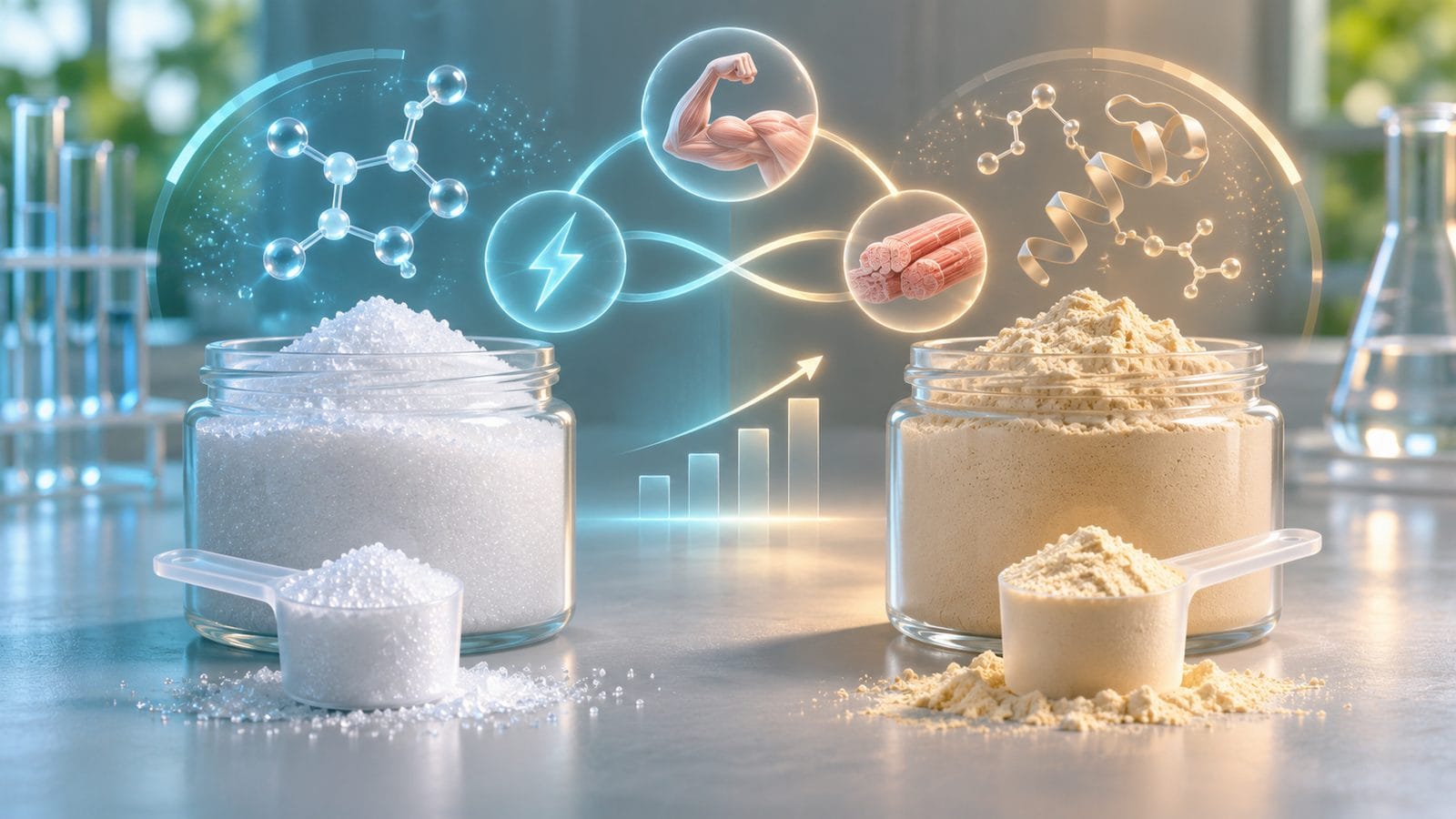
Protein powder supplies amino acids for muscle repair; creatine helps regenerate energy for hard sets. They do different jobs, and most healthy adults can take both: 3–5 g of creatine a day and enough protein to hit the daily total.

We include products we think are useful for our readers. If you buy through links on this page, we may earn a small commission.
I’m Fred, a marketer—not a doctor or dietitian. AI helps me draft, and I link every research claim to its source so you can check the evidence yourself. The direct answer: creatine and protein powder do different jobs, and many healthy adults can take both.
The short answer
- Protein powder supplies protein, including the amino acids your body uses to repair and build muscle. It is mainly a convenient food.
- Creatine helps replenish rapid energy used during repeated, high-intensity efforts such as lifting and sprinting.
- Creatine vs protein is not an either/or decision. One does not replace the other, and taking both can make sense when your diet, training and goals justify them.
- Daily consistency matters more than perfect timing. Meet your overall protein needs and take creatine regularly.
- Ask a doctor before using either supplement during pregnancy, for a child or if you have kidney disease.
Creatine vs protein: the key differences
The simplest distinction is that protein is a macronutrient, while creatine is a small compound involved in energy availability. Protein powder can help fill a nutritional gap. Creatine cannot replace dietary protein, a balanced meal or resistance training.
| Question | Protein powder | Creatine |
|---|---|---|
| What is it? | A concentrated source of dietary protein and amino acids | A compound stored mainly in muscle as free creatine and phosphocreatine |
| Primary role | Helps meet protein needs and provides material for tissue repair and muscle protein synthesis | Supports rapid ATP regeneration during short, repeated bouts of intense activity |
| Does it contain meaningful calories? | Yes | Pure creatine monohydrate generally contributes no meaningful food energy |
| Most useful when | Your normal meals do not reliably provide enough high-quality protein | You perform resistance training, sprinting or other repeated high-intensity exercise |
| Common evidence-based form | Whey, casein, soy or a complementary plant-protein blend | Creatine monohydrate |
| Typical daily approach | Enough to close the gap between food intake and your protein target | Usually 3–5 g daily; loading is optional |
| What it cannot do | Replace progressive training or guarantee muscle gain | Supply protein or compensate for inadequate nutrition |
Protein powders differ considerably. Whey is milk-derived and rich in essential amino acids; casein is also milk-derived but digests more slowly. Soy is a complete plant protein, while products based on pea, rice or other plants may combine sources to improve their amino-acid profile. Our guide to how protein powder is made and how to choose explains these differences in more detail, and our guide to protein shakes for muscle growth covers ready-made options.
Creatine supplements are much less complicated. Creatine monohydrate is the form supported by the largest body of evidence. Other forms may be marketed as more soluble or advanced, but the International Society of Sports Nutrition (ISSN) position stand does not find evidence that they consistently outperform monohydrate (Kreider et al., Journal of the International Society of Sports Nutrition, 2017).
What protein powder actually does
Digested protein supplies amino acids. Your body uses those amino acids throughout the body, including to replace and build muscle proteins. Resistance exercise and protein intake each stimulate muscle protein synthesis, and together they provide a stronger signal than either does alone, according to the ISSN protein position stand (Jäger et al., Journal of the International Society of Sports Nutrition, 2017).
Protein powder is useful because it makes a certain amount of protein portable and easy to measure. It is not inherently more anabolic than an appropriate serving of protein-rich food. Eggs, dairy foods, fish, meat, soy foods and legumes can all contribute to daily intake while providing other nutrients.
For healthy people who exercise, the ISSN identifies roughly 1.4–2.0 g of protein per kilogram of body weight per day as sufficient for most people seeking to build or maintain muscle. A large meta-analysis found that protein supplementation can improve resistance-training gains, but the average additional benefit becomes smaller once total intake is around 1.6 g/kg/day (Morton et al., British Journal of Sports Medicine, 2018). That is a population estimate, not a hard ceiling for every individual.
A powder therefore makes the most sense when it solves a practical problem: breakfast is consistently low in protein, appetite is limited, or meals around training are inconvenient. If food already covers your needs, adding shakes may provide little extra benefit.
Whey isolate generally contains less lactose than whey concentrate, though it is not automatically lactose-free. People comparing concentrates, isolates and hydrolysates can read more about whey protein isolate. Those avoiding dairy can consider soy or a well-formulated option from our guide to vegan protein powders.
What creatine actually does
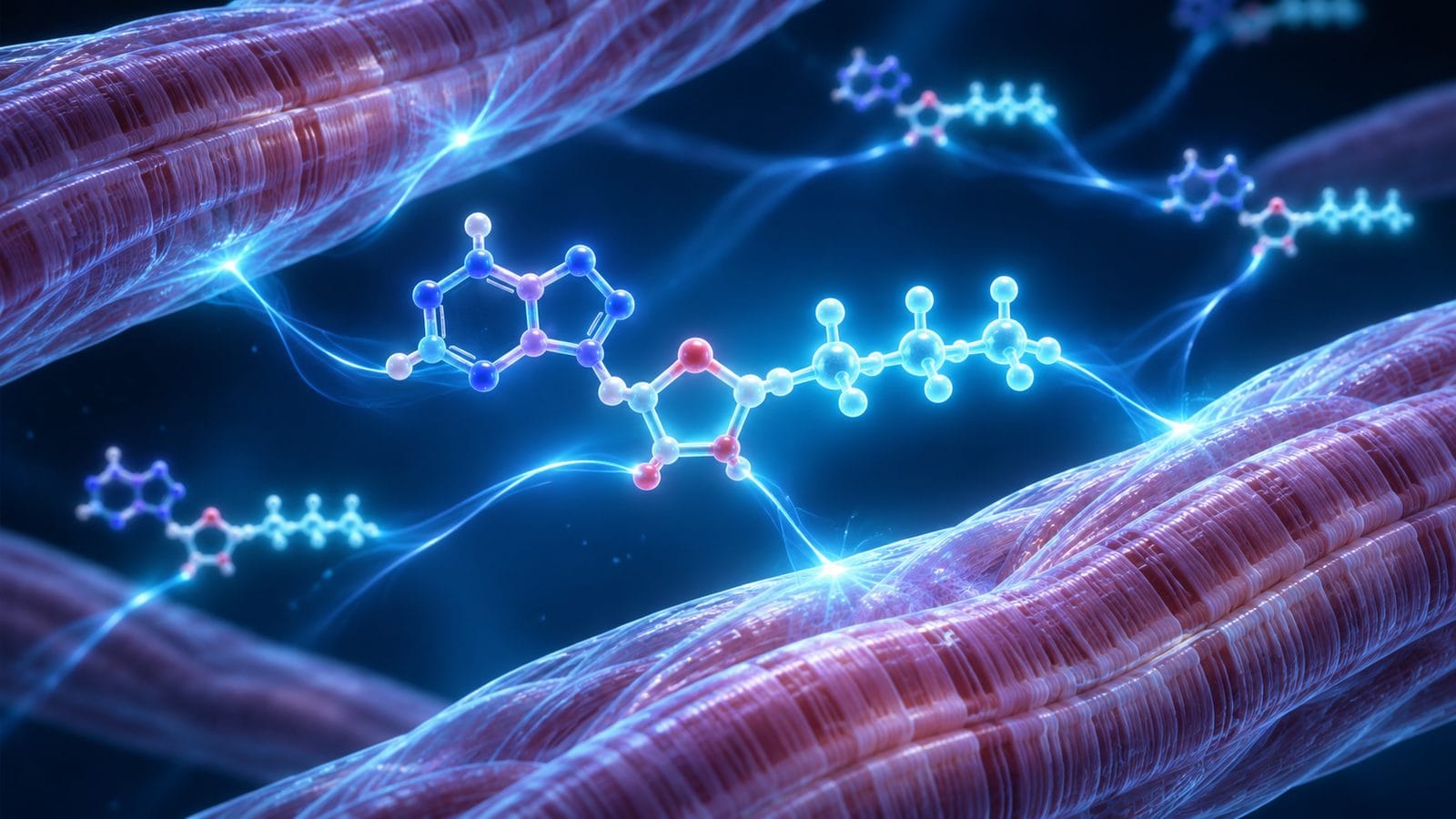
Muscle contraction requires adenosine triphosphate, or ATP. Stored ATP is limited, so working muscle must rapidly regenerate it. Phosphocreatine donates a phosphate group to help rebuild ATP, which matters especially during brief, demanding efforts and repeated sets.
Supplemental creatine increases muscle creatine stores for many—but not all—users. Over time, the ability to complete slightly more high-quality work may support training adaptations. Creatine is not a stimulant, and you do not need to feel an immediate effect for it to be working.
The ISSN describes creatine monohydrate as an effective ergogenic supplement for increasing high-intensity exercise capacity and lean mass during training (Kreider et al., Journal of the International Society of Sports Nutrition, 2017). A systematic review of direct muscle measurements also found that creatine combined with resistance training produced a small additional increase in directly measured muscle thickness in both the upper and lower body, compared with training alone (Burke et al., Nutrients, 2023).
Creatine sometimes increases scale weight early in use because it draws additional water into muscle. That is not the same as gaining body fat. Longer-term changes depend on training, diet, individual response and the duration of use.
People who eat little or no meat or fish may begin with lower muscle creatine stores and can sometimes show a larger rise after supplementation. Responses still vary, and omnivores can benefit too. Creatine has also been studied outside sports, including in older adults and cognitive settings, but those possible uses should not be turned into promises about preventing or treating disease.
Can you take creatine and protein powder together?
Yes. For most healthy adults, there is no established reason to separate creatine and protein powder. They can be taken in the same drink, in different drinks or at separate meals. Combining them does not make them the same supplement; it simply addresses two different parts of a training plan.
A protein shake with creatine can be convenient after training, but convenience is the main advantage. You could also take creatine with breakfast and get protein from dinner. The important questions are whether you take creatine consistently and whether total daily protein intake is adequate.
Research on multi-ingredient supplements is harder to interpret because products may contain protein, creatine, carbohydrate and several other ingredients. A review found that multi-ingredient protein supplements can augment some resistance-training outcomes, but it could not cleanly attribute every effect to one ingredient (O’Bryan et al., British Journal of Sports Medicine, 2020). Separate products make doses easier to see and adjust, although a transparent combined formula can also be workable.
Taking both does not guarantee muscle gain. Progressive resistance training, sufficient food, sleep and adherence remain foundational. Protein can support the muscle-building response to training; creatine may help you perform and adapt to repeated high-intensity work.
How much to take and when
Protein amount and timing
Start with the daily total. Estimate how much protein your normal meals provide, then use powder only to cover a meaningful shortfall. A serving containing about 20–40 g of high-quality protein is a common practical range around a meal or workout. Larger people and meals based on lower-leucine proteins may require a different amount.
Spreading protein across several meals is a reasonable strategy because each meal offers another opportunity to stimulate muscle protein synthesis. The ISSN suggests evenly distributed servings approximately every three to four hours, but real life does not need to run on a stopwatch (Jäger et al., Journal of the International Society of Sports Nutrition, 2017).
The so-called anabolic window is not a few frantic minutes. A meta-analysis found that apparent timing benefits were largely explained by differences in total protein intake (Schoenfeld et al., Journal of the International Society of Sports Nutrition, 2013). Eating protein reasonably near training is sensible, particularly if you have not eaten for several hours, but consistently meeting the daily target matters more.
Creatine amount and timing
A simple approach is 3–5 g of creatine monohydrate every day. A loading phase can saturate muscle more quickly: studies and position stands commonly use about 20 g per day, divided into four smaller servings, for five to seven days before switching to a maintenance dose. Loading is optional; taking a smaller daily amount reaches saturation more gradually.
Evidence has not established a universally superior time of day for creatine. Take it when you are most likely to remember it. Mixing it into a post-workout protein shake is practical, but a rest-day dose with any meal is equally reasonable for maintaining the habit.
Dividing a loading dose can reduce stomach discomfort. Creatine should be mixed according to directions and consumed with adequate fluid, but there is no good basis for forcing excessive water intake. If a supplement repeatedly causes digestive symptoms, stop using it and discuss the issue with a qualified clinician.
Three creatine monohydrate powders with a certifier listing
Creatine is a single-ingredient product, so the useful differences are price and whether an independent program lists it. The three unflavored powders below each give 5 g of creatine monohydrate per serving with nothing else added, and each is listed in a certifier database that screens for substances prohibited in sport. Prices are regular one-time iHerb US prices read on 22 November 2026 (Black Friday codes ignored). For protein powders, see the five unflavored wheys compared in our guide to whey isolate vs concentrate, and more creatine options in our creatine monohydrate guide.
| Powder (unflavored) | Per serving | Servings | Price per 5 g | Certification |
|---|---|---|---|---|
| NOW Foods NOW Sports Creatine Monohydrate | 5 g creatine monohydrate | 200 | $0.19 | Informed Sport |
| Sports Research Creatine Monohydrate, Unflavored | 5 g creatine monohydrate | 100 | $0.29 | NSF Certified for Sport |
| Thorne Creatine | 5 g creatine monohydrate | 90 | $0.49 | NSF Certified for Sport |
NOW Foods NOW Sports Creatine Monohydrate, 1 kg
Pure creatine monohydrate with no other ingredients, in a 1 kg bag that lasts about 200 days at 5 g. Listed in the Informed Sport database. The cheapest per daily dose of the three. Regular one-time iHerb US price $38.46 for 200 servings of 5 g, or $0.19 a day. See it on iHerb
Sports Research Creatine Monohydrate, Unflavored, 500 g
Micronized creatine monohydrate, which mixes a little more easily into a shake; 5 g per scoop. Listed in the NSF Certified for Sport database. Regular one-time iHerb US price $28.97 for 100 servings of 5 g, or $0.29 a day. See it on iHerb
Thorne Creatine, 450 g
Creatine monohydrate, 5 g per scoop, from a brand whose other sports products are also in the NSF Certified for Sport list; this one is listed too. The most expensive per dose here, at about two and a half times the NOW price. Regular one-time iHerb US price $44.00 for 90 servings of 5 g, or $0.49 a day. See it on iHerb
Who should choose protein, creatine or both?
Choose protein powder first if your diet falls short
Protein powder is the more direct choice when you regularly miss an appropriate protein target. This may apply to people with limited time, low appetite, restricted food choices or meals built mostly around low-protein foods. It is also the priority when someone is considering creatine while their basic nutrition remains inconsistent.
For a dairy-free diet, consider soy or complementary plant proteins. Pea protein can contribute effectively, although its amino-acid profile differs from whey; see our guide to pea protein powder. Those who tolerate milk protein but not much lactose can compare genuinely lactose-free protein powders rather than assuming every isolate qualifies.
Choose creatine first if protein is already covered
If your diet reliably supplies sufficient protein and your main goal is improving resistance-training or repeated high-intensity performance, creatine may fill the more relevant gap. It is inexpensive in principle, straightforward to dose and does not require increasing calorie intake.
Choose both if each solves a separate problem
Both can make sense for a lifter who struggles to reach a protein target and also wants the performance and training support associated with creatine. They can also be useful during busy periods when consistent meals are difficult, provided supplements remain additions to—not replacements for—a sound diet.
Choose neither when there is no clear need
You do not need protein powder if food comfortably supplies enough protein. You do not need creatine to become stronger, and endurance-focused recreational activity may provide fewer obvious reasons to use it. A beginner can progress substantially by learning technique, training consistently, eating adequately and sleeping well.
Safety, side effects and quality checks
Creatine commonly causes a modest increase in body weight related partly to water held within muscle. Some users report digestive discomfort, especially with large single doses. Reviews of the research do not support the common claim that recommended creatine use causes dehydration or muscle cramping in healthy users (Antonio et al., Journal of the International Society of Sports Nutrition, 2021).
Protein powders can cause bloating or digestive symptoms depending on dose, lactose content, sweeteners and individual tolerance. A whey concentrate may be uncomfortable for someone who is lactose intolerant, while an unflavored isolate or plant protein may be easier to fit. Milk-protein allergy is different from lactose intolerance and requires avoiding the relevant allergen.
Dietary supplements are not approved by the FDA for safety and effectiveness before sale in the same way as medicines. The FDA’s dietary-supplement information explains the regulatory framework and consumer reporting options.
When comparing generic options, check:
- Whether the label states the amount of creatine or protein per serving clearly
- Whether creatine is plain creatine monohydrate rather than a proprietary blend
- The protein source, complete ingredient list, sweeteners and declared allergens
- Lactose-related claims if lactose intolerance matters to you
- Independent certification such as NSF Certified for Sport or Informed Sport, particularly for drug-tested athletes
- For protein powders, the cost per 25 g of actual protein rather than cost per scoop
Third-party certification can verify selected aspects of manufacturing or screen for prohibited substances, but it does not prove that a supplement will produce a particular result. Clean Label Project reporting addresses a different set of quality questions and should be interpreted according to the methods and criteria disclosed for each program.
Anyone who is pregnant, considering a supplement for a child or living with kidney disease should ask a doctor before using creatine or protein powder. People taking medication or managing another medical condition should also ask a clinician or pharmacist about individual risks. An elevated blood creatinine result can require careful interpretation in someone using creatine, so tell the clinician about all supplements.
Frequently Asked Questions
Is creatine better than protein for building muscle?
Neither is universally better because they act differently. Protein supplies amino acids needed for muscle protein synthesis, while creatine supports rapid energy regeneration and may improve training capacity. If your protein intake is inadequate, fixing that gap is the logical priority. If protein is already sufficient, creatine may offer an additional benefit alongside resistance training.
Can I put creatine in a protein shake?
Yes. Most healthy adults can mix a normal daily creatine dose into a protein shake. This is a convenience strategy, not a special combination that makes either ingredient more powerful. Drink it reasonably soon after mixing, follow the product directions and use separate measuring tools if the serving sizes differ.
Should I take whey protein or creatine after a workout?
You can take either or both after training, but they do not have to be taken then. Whey provides a convenient dose of rapidly digested protein, while creatine works through regular use and muscle saturation. Prioritize adequate total daily protein and a creatine schedule you can maintain.
Does creatine contain protein?
No. Creatine is not a protein and does not supply a meaningful serving of amino acids for meeting protein requirements. Likewise, ordinary protein powder does not necessarily provide an evidence-based creatine dose unless the label explicitly lists added creatine. Check each ingredient and amount rather than treating the products as interchangeable.