Best Greens Supplement: Nutritional Benefits and Top Products
Top greens supplements offer essential nutrients to boost health and energy. Find out which products deliver the best nutritional benefits for your diet.

We include products we think are useful for our readers. If you buy through links on this page, we may earn a small commission.
The best greens supplement is a transparent, third-party-tested powder that fits your diet, budget, taste preferences, and wellness goals without promising to replace vegetables. Leading options combine nutrient-dense plants such as spinach, kale, spirulina, chlorella, wheatgrass, and broccoli with carefully selected extras like probiotics, digestive enzymes, or adaptogenic herbs. Although greens powders can help broaden nutrient intake and make healthy routines more convenient, their formulas differ substantially. This guide explains the most credible greens powder benefits, compares popular products, and shows you how to evaluate superfood greens supplements safely.
What Is a Greens Supplement, and Who Might Benefit? | Evidence-Based Greens Powder Benefits | Superfood Ingredients Worth Understanding | Top Greens Supplements for Different Wellness Goals | How to Choose the Best Greens Supplement | Safety, Side Effects, and Medication Interactions | How to Use Greens Powder Effectively | Frequently Asked Questions | The Bottom Line
What Is a Greens Supplement, and Who Might Benefit?
A greens supplement is a concentrated mixture of dried or extracted plant ingredients, usually sold as a powder to mix with water, smoothies, or other beverages. A typical formula may contain leafy vegetables, grasses, algae, herbs, fruit extracts, mushrooms, fiber, probiotics, and added vitamins or minerals. Some products emphasize basic nutrition, while others are designed around digestion, energy, stress support, or athletic performance.
Convenience is the central appeal. Washing, chopping, and preparing produce takes time, whereas a scoop of powder can be used in seconds. This may be useful for frequent travelers, shift workers, students, people with limited access to fresh produce, or anyone whose diet becomes inconsistent during busy periods. A greens powder can also introduce small amounts of plant compounds from foods that a person rarely eats.
However, even the best greens supplement is an addition to a balanced diet—not a replacement for whole fruits and vegetables. Whole foods supply water, intact fiber, satisfying volume, and complex plant structures that processing can reduce. They also make it easier to obtain meaningful servings of individual nutrients. A powder containing dozens of ingredients may list kale or broccoli prominently while providing only a modest quantity of each.
The most appropriate user is therefore someone who already understands the value of a varied diet but wants a practical nutritional backstop. Greens powders may also suit people who dislike certain vegetables, provided the product does not become an excuse to avoid produce altogether. Anyone who is pregnant, breastfeeding, taking medication, managing a chronic condition, or preparing for surgery should discuss concentrated botanical formulas with a qualified clinician first.
Evidence-Based Greens Powder Benefits
The potential greens powder benefits begin with nutrient density. Leafy greens and algae can contribute micronutrients and phytochemicals, including folate, carotenoids, vitamin K, and polyphenols. The actual contribution depends on serving size, processing, ingredient proportions, and whether vitamins and minerals have been added separately. A long ingredient list alone does not prove that a product delivers nutritionally meaningful amounts.
Antioxidant support is another common selling point. Plant pigments and polyphenols can help the body manage oxidative stress as part of its normal defense systems. Small studies of particular greens formulas have reported changes in antioxidant status or selected cardiovascular markers, but the evidence is not strong enough to assume that every powder produces the same effects. Proprietary blends, short study periods, small participant groups, and manufacturer funding can limit how broadly findings apply.
Some formulas may support digestive regularity when they provide a meaningful dose of fiber. Yet many powders contain only one or two grams per serving, far less than a meal rich in beans, vegetables, fruit, or whole grains. Products with inulin, acacia fiber, or other prebiotic ingredients may help nourish beneficial gut microorganisms, although they can also cause gas or bloating in sensitive users.
Probiotic-containing products require especially careful evaluation. Benefits depend on the exact microbial strain, viable dose, storage conditions, and evidence for the intended use. A label that merely lists “probiotic blend” is less informative than one identifying organisms down to the strain level and guaranteeing colony-forming units through the product’s expiration date. Digestive enzymes may help in specific circumstances, but they are not universally necessary for healthy digestion.
Users sometimes report steadier energy, better concentration, or fewer afternoon cravings after adopting a greens routine. These experiences can be genuine without proving a direct pharmacological effect. Mixing a powder with water may improve hydration, and establishing a morning wellness ritual may encourage better food choices throughout the day. Reviews are valuable for judging flavor, texture, and usability, but controlled evidence carries more weight for health claims.
Superfood Ingredients Worth Understanding
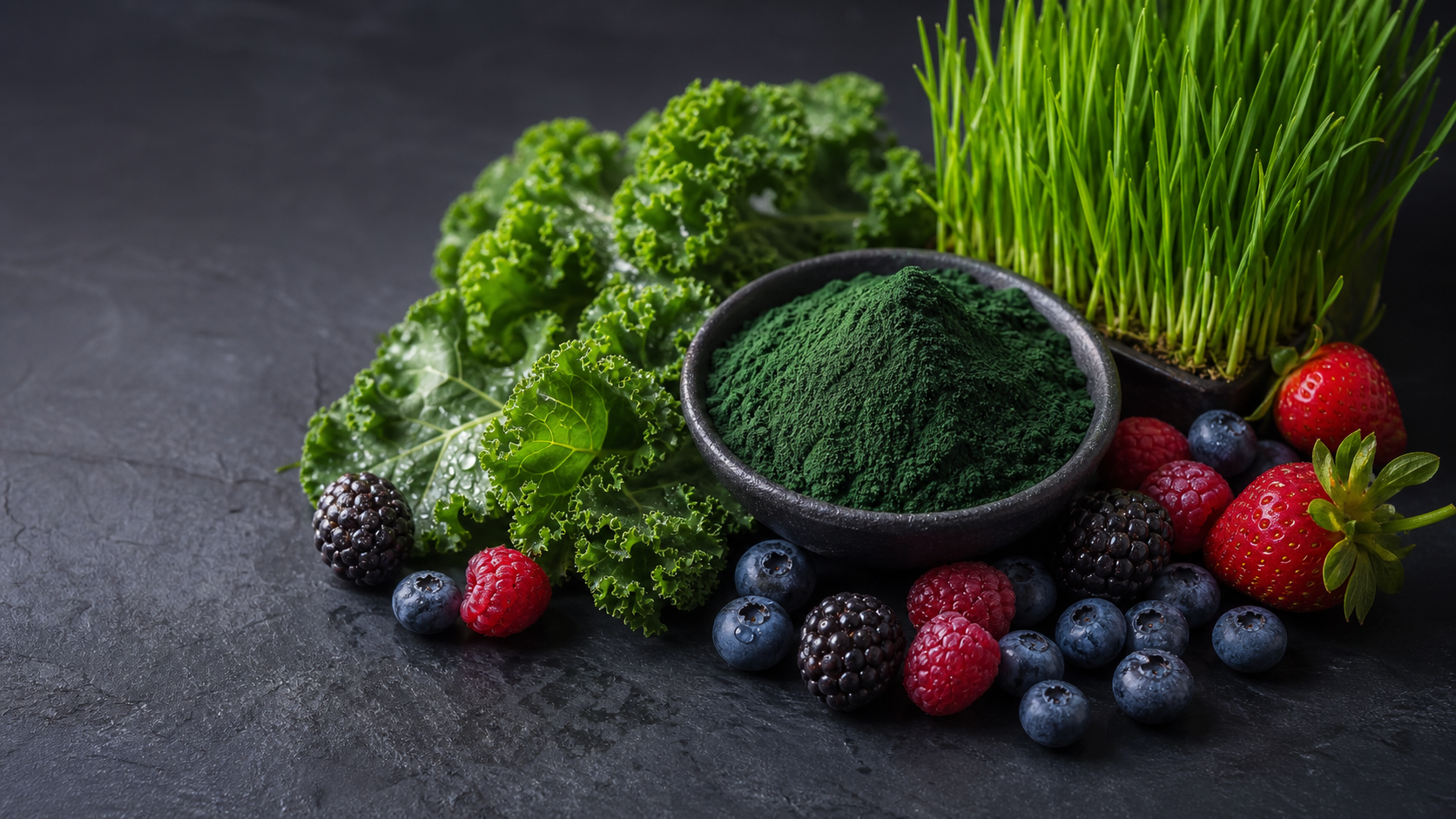
Superfood greens supplements often contain an impressive botanical roster, but recognizable ingredients should be assessed by dose and purpose. Spinach and kale provide carotenoids and other phytonutrients. Broccoli and related cruciferous vegetables contain glucosinolate-derived compounds, although their levels and biological activity can change during drying and extraction. Beetroot may supply nitrates, while berry extracts can contribute colorful polyphenols.
Spirulina is a blue-green cyanobacterium valued for its protein, pigments, and concentrated nutritional profile. Chlorella is a freshwater alga that supplies chlorophyll and several micronutrients. These ingredients can add nutritional variety, but quality control matters because algae may accumulate contaminants from their growing environment. Look for manufacturers that test for heavy metals, harmful microbes, and relevant algal toxins.
Wheatgrass, barley grass, and alfalfa are common foundational ingredients. Despite the name, properly harvested wheatgrass does not inherently contain the gluten-rich grain, but cross-contact during growing or manufacturing remains possible. People with celiac disease or medically diagnosed gluten sensitivity should choose a product explicitly labeled and independently verified as gluten-free.
Many premium blends add adaptogens such as ashwagandha, rhodiola, or medicinal mushrooms. These are active botanicals rather than simple vegetables. They may have distinct effects, contraindications, and medication interactions, and more is not necessarily better. Consumers who primarily want plant nutrition may prefer a streamlined formula without a large collection of herbs.
Sweeteners and flavorings also influence the experience. Stevia and monk fruit can reduce added sugar but may leave an aftertaste. Natural fruit flavors make earthy powders easier to drink, while sugar alcohols can upset digestion in some people. An unflavored product offers flexibility in smoothies, but its grassy or marine notes may be challenging when mixed only with water.
Finally, examine the nutrition panel rather than relying on front-label language. Vitamins present at several hundred percent of the daily value may be unnecessary for many users, especially when combined with a multivitamin or fortified foods. A carefully dosed formula is generally more useful than one that treats extreme percentages as proof of quality.

Top Greens Supplements for Different Wellness Goals
No single powder is ideal for every consumer. The following widely recognized products illustrate useful formula categories rather than a universal ranking. Formulations, certifications, prices, and package sizes can change, so always verify the current label before purchasing.
AG1: Best for an All-in-One Routine
AG1 is positioned as a comprehensive daily formula containing greens, vitamins, minerals, probiotics, enzymes, mushrooms, and botanical extracts. Its main advantages are convenience and a broad formulation that may appeal to people who want to consolidate several supplements into one drink. Many users praise its drinkability and polished subscription experience, while common criticisms focus on premium pricing and limited disclosure of individual ingredient quantities within blends.
Because the formula is complex, it deserves the same scrutiny as taking several supplements simultaneously. Consumers should compare its vitamin and mineral content with other products they use and review the botanical ingredients for potential interactions.
Thorne Daily Greens Plus: Best for Performance-Oriented Buyers
Thorne Daily Greens Plus combines plant concentrates with ingredients marketed for cellular energy, stress resilience, and cognitive support. It may appeal to active adults who prefer a sophisticated formula from an established supplement company. Its flavored profile and added functional ingredients distinguish it from basic vegetable powders.
The tradeoff is that users seeking only greens may be paying for compounds they do not need. Caffeine-sensitive consumers and competitive athletes should inspect the latest ingredient list and applicable testing credentials rather than assuming every version suits their requirements.
Amazing Grass Greens Blend: Best Budget-Friendly Option
Amazing Grass Greens Blend is a familiar entry-level choice built around grasses, leafy plants, algae, and antioxidant-focused ingredients. It is generally more affordable than luxury daily powders and is available in several flavors. User reviews frequently highlight value and easy availability, although opinions about sweetness, texture, and grassy flavor vary.
This type of product works well for consumers who want a straightforward habit without a high monthly cost. As with any blend, the serving’s fiber and micronutrient totals are more informative than the number of plants pictured on the container.
Garden of Life Raw Organic Perfect Food: Best Organic-Focused Choice
Garden of Life offers greens powders emphasizing organic plant ingredients and a broad raw-food identity. These formulas can appeal to shoppers who prioritize organic sourcing and want grasses, vegetable juices, sprouts, enzymes, or probiotics in one product. Several versions exist, so buyers should distinguish between flavored and unflavored products and compare their precise contents.
The dense, earthy taste may work better in a fruit smoothie than in plain water. People with sensitive digestion should begin cautiously because large, diverse botanical blends can be harder to tolerate than simpler products.
KOS Show Me the Greens: Best for Flavor and Approachability
KOS Show Me the Greens is designed for consumers who want a more approachable flavor while still obtaining a mixture of greens, algae, and plant-based ingredients. The formula may suit first-time buyers who have abandoned stronger-tasting powders in the past. Reviews often treat palatability as its main advantage, underscoring an important point: a theoretically perfect powder provides little value if it remains unused.
Flavor preference is personal, so purchasing a smaller package before committing to a subscription is sensible. Compare sweeteners, serving size, and nutrient quantities with less flavored alternatives.
How to Choose the Best Greens Supplement
Start with independent quality verification. In the United States, dietary supplements are regulated differently from medicines and are not preapproved for effectiveness before reaching the market. Certification from a respected third-party program can provide additional assurance that a product was manufactured to defined standards and that its contents more closely match the label. Athletes should look for sport-specific screening when banned-substance risk matters.
Next, favor transparent dosing. A supplement facts panel that lists individual quantities allows meaningful comparison and helps clinicians identify potentially excessive or interacting ingredients. Proprietary blends disclose the total blend weight while obscuring the amount of each component. They are not automatically inferior, but they make it harder to evaluate whether highlighted ingredients are present at useful doses.
Check for contaminants and allergens. Credible manufacturers should be willing to discuss testing for heavy metals, pesticides, microbial contamination, and other risks relevant to their ingredients. Consumers with allergies should inspect both the ingredient list and facility warnings. Vegan, organic, kosher, non-GMO, and gluten-free labels address different priorities and should not be treated as interchangeable signs of overall quality.
Evaluate value by cost per serving, not container price. Then factor in shipping, subscription requirements, serving frequency, and whether the powder replaces another supplement you would otherwise buy. An expensive all-in-one may be economical for one person but redundant for someone already taking targeted nutrients.
Taste and practicality deserve serious weight. Read user reviews for recurring observations about clumping, sweetness, smell, container fill, and customer service. Give less weight to dramatic testimonials about rapid detoxification, weight loss, or disease reversal. The best reviews describe how the product actually mixes and fits into daily life.
Safety, Side Effects, and Medication Interactions
Most healthy adults tolerate modest servings of reputable greens powders, but side effects can include nausea, bloating, diarrhea, constipation, headache, or reactions to sweeteners and herbs. Beginning with half a serving may help identify tolerance. Follow label instructions, use clean utensils, close the container tightly, and respect refrigeration guidance for formulas containing probiotics.
Vitamin K deserves attention for people using warfarin or related anticoagulation plans. Leafy-green concentrates can affect vitamin K intake, and consistency is often important. This does not mean all greens must be avoided; it means changes should be coordinated with the clinician managing the medication.
Added iodine from sea vegetables may matter for people with thyroid conditions. Adaptogens can interact with thyroid medicines, sedatives, immunosuppressants, diabetes treatments, and other drugs. Some botanical ingredients are not well studied during pregnancy or breastfeeding. Kidney disease can also alter how the body handles potassium, phosphorus, or concentrated nutrients.
Stop using a product and seek appropriate care if it causes signs of an allergic reaction, persistent vomiting, severe abdominal symptoms, or other concerning effects. A greens drink should support an ordinary wellness routine, not create a test of endurance.
How to Use Greens Powder Effectively
Consistency matters more than an elaborate preparation ritual. Mix the recommended serving with cold water and drink it with or near a meal if taking it on an empty stomach causes discomfort. A shaker bottle or handheld frother can improve texture. Because some nutrients degrade with prolonged heat or storage, avoid stirring the powder into boiling liquids unless the manufacturer specifically permits it.
For a more balanced smoothie, blend greens powder with fruit, unsweetened milk or a fortified alternative, and a source of protein such as yogurt or tofu. Nut butter, seeds, or avocado can add dietary fat, which supports the absorption of fat-soluble carotenoids. Remember that these additions turn the drink into a snack or meal with additional calories, not merely flavored water.
Maintain realistic expectations. A greens powder cannot “detox” the body in the sweeping way advertisements sometimes imply; the liver, kidneys, lungs, gastrointestinal tract, and skin already perform continuous waste-processing functions. Nor can a scoop compensate for chronic sleep loss, smoking, excessive alcohol intake, or an otherwise nutrient-poor diet.
A practical goal is to use the supplement as a prompt for broader habits. Pair it with breakfast, keep whole fruit visible, add a vegetable to lunch, and rotate produce colors across the week. This approach captures convenience while preserving the well-established advantages of varied whole foods.
Related Articles
Frequently Asked Questions
Are greens powders as good as eating vegetables?
No. Greens powders may contribute micronutrients and plant compounds, but they usually lack the water, intact fiber, volume, culinary variety, and full food matrix of vegetables. Use them to complement produce, not replace it.
Can I take a greens supplement every day?
Many healthy adults can use a well-formulated product daily according to its label. Check for overlapping vitamins, minerals, herbs, and probiotics in your other supplements. Consult a healthcare professional if you take medication, have a medical condition, are pregnant, or are breastfeeding.
When is the best time to drink greens powder?
There is no universally superior time. Morning use is popular because it is easy to attach to breakfast, but tolerance and consistency matter most. Taking the powder with food may reduce nausea, while products containing stimulating ingredients may be better avoided near bedtime.
How long does it take to notice greens powder benefits?
There is no guaranteed timeline. Hydration or digestive changes may be noticed relatively quickly, while correction of a true nutrient deficiency depends on the nutrient, dose, absorption, and underlying cause. Dramatic immediate effects should be viewed skeptically. Assess the product over several weeks based on tolerance, routine consistency, diet quality, and measurable goals rather than marketing promises.
The Bottom Line
The best greens supplement is the one that combines credible testing, transparent labeling, sensible nutrient doses, tolerable flavor, and a price you can sustain. Broad formulas such as AG1 or Thorne may suit consumers seeking an all-in-one routine, while products from Amazing Grass, Garden of Life, or KOS may better match priorities such as affordability, organic sourcing, or approachable taste.
Greens powder benefits are plausible but often overstated. These products can make plant-based nutrition more convenient and may help fill limited dietary gaps, yet research does not support treating them as replacements for vegetables or cures for disease. Choose superfood greens supplements with the same care you would apply to any concentrated nutritional product, and build the foundation of wellness from varied food, movement, sleep, hydration, and appropriate medical care.