Athletic Greens Alternative: Comparative Supplement Options
Top alternatives to Athletic Greens offer diverse supplement options to support your health and wellness with effective nutrient blends and quality ingredients.

We include products we think are useful for our readers. If you buy through links on this page, we may earn a small commission.
The best Athletic Greens alternative is not necessarily the product with the longest ingredient list. It is the supplement that fits your nutritional needs, budget, dietary restrictions, and willingness to use it consistently. AG1 combines greens, vitamins, minerals, probiotics, enzymes, mushrooms, and botanical extracts in one premium powder, but less expensive greens powder substitutes can provide many of the same core features. Huel Daily Greens is a broad all-in-one option, Thorne Daily Greens Plus emphasizes botanical extracts, Amazing Grass offers affordable foundational greens, and Bloom Greens & Superfoods focuses on flavor and digestive ingredients. None, however, should be treated as a replacement for vegetables, fruit, adequate protein, or medical care.
Why Look for an Alternative to Athletic Greens? | How Leading Greens Supplements Compare | Ingredient Differences That Actually Matter | Best Athletic Greens Alternatives by Use Case | Pricing: Compare Cost per Serving, Not Container Price | What the Evidence Says About Efficacy | Safety, Quality, and Label Checks | How to Choose the Best Greens Supplement for You | Frequently Asked Questions
Why Look for an Alternative to Athletic Greens?
AG1, formerly marketed primarily under the Athletic Greens name, is designed for convenience. A scoop combines plant powders with added micronutrients and several specialty ingredients that would otherwise require multiple products. That breadth appeals to travelers, people with irregular diets, and consumers who prefer one daily routine over a shelf full of capsules.
The most common reason to seek an athletic greens alternative is price. AG1 generally occupies the premium end of the category, especially when purchased without a subscription. A lower-cost product may save hundreds of dollars over a year while still supplying familiar ingredients such as spirulina, chlorella, cereal grasses, broccoli, digestive enzymes, or probiotics. Prices and promotions change frequently, so compare the current cost per serving rather than the price printed on the front of the package.
Formula design is another reason to switch. More ingredients do not automatically produce a more effective supplement. Complex proprietary blends may disclose the total weight of a mixture without revealing how much of each component is present. That makes it difficult to determine whether an adaptogen, mushroom, or digestive ingredient is included at a dose comparable to amounts studied in clinical research.
Some users also want fewer fortified vitamins because they already take a multivitamin, while others specifically want a greens powder that supplies meaningful amounts of vitamins and minerals. Flavor, sweeteners, allergens, caffeine, probiotic stability, and third-party testing can be equally important. The right alternative depends on which parts of AG1 you actually value.
How Leading Greens Supplements Compare
The following comparison provides a useful starting point rather than a universal ranking. Formulas, serving sizes, and retail prices can change, so always confirm the current Supplement Facts panel before ordering.
| Product | Formula emphasis | Typical price position | Best suited to |
|---|---|---|---|
| AG1 | Broad all-in-one blend with fortified micronutrients, botanicals, enzymes, and gut-support ingredients | Premium | Consumers who value a comprehensive single-scoop routine |
| Huel Daily Greens | Greens, fruit powders, vitamins, minerals, adaptogens, mushrooms, and digestive ingredients | Mid-to-premium | People seeking a broad formula at a lower cost than AG1 |
| Thorne Daily Greens Plus | Greens combined with concentrated botanical and antioxidant ingredients | Premium | Consumers prioritizing brand quality controls and targeted plant extracts |
| Amazing Grass Super Greens | Cereal grasses, algae, fruit and vegetable ingredients, with selected digestive support | Budget | Shoppers who want straightforward greens at a low cost per serving |
| Bloom Greens & Superfoods | Flavored greens with fiber, prebiotics, probiotics, and digestive enzymes | Budget-to-midrange | Users who prioritize taste and an approachable daily drink |
Huel Daily Greens is among the closest conceptual substitutes because it attempts to cover several categories at once. It may appeal to someone who likes AG1’s breadth but wants a different flavor profile or lower subscription cost. Its long label creates the same interpretive challenge as other complex blends: numerous named ingredients do not guarantee that every ingredient appears at a clinically meaningful dose.
Thorne Daily Greens Plus takes a somewhat more targeted approach. Its appeal lies less in mimicking a powdered salad and more in combining plant nutrients with selected extracts. It can be a strong option for label-conscious buyers, but it remains relatively expensive and may overlap with other antioxidant or botanical supplements.
Amazing Grass is one of the more economical greens powder substitutes. Its core products emphasize cereal grasses, spirulina, chlorella, and fruit or vegetable ingredients rather than trying to duplicate every component of AG1. That simpler construction can be a virtue for people who already use a separate multivitamin, although it may provide less comprehensive micronutrient fortification.
Bloom Greens & Superfoods is positioned as a palatable wellness drink with greens and digestive-support ingredients. Its range of flavors may improve adherence for people who dislike earthy powders. On the other hand, consumers should distinguish between pleasant taste, subjective relief from bloating, and proven treatment of a digestive condition. A supplement can be easy to drink without being the most nutritionally complete choice.
Ingredient Differences That Actually Matter
Greens powders often place impressive-sounding plants at the center of their marketing, but the Supplement Facts panel is more informative than the number of ingredients advertised. Start by separating whole-food powders from standardized extracts and added nutrients. Kale powder, for example, is not nutritionally identical to fresh kale, while an isolated vitamin added to a blend functions more like the same vitamin in a conventional multivitamin.
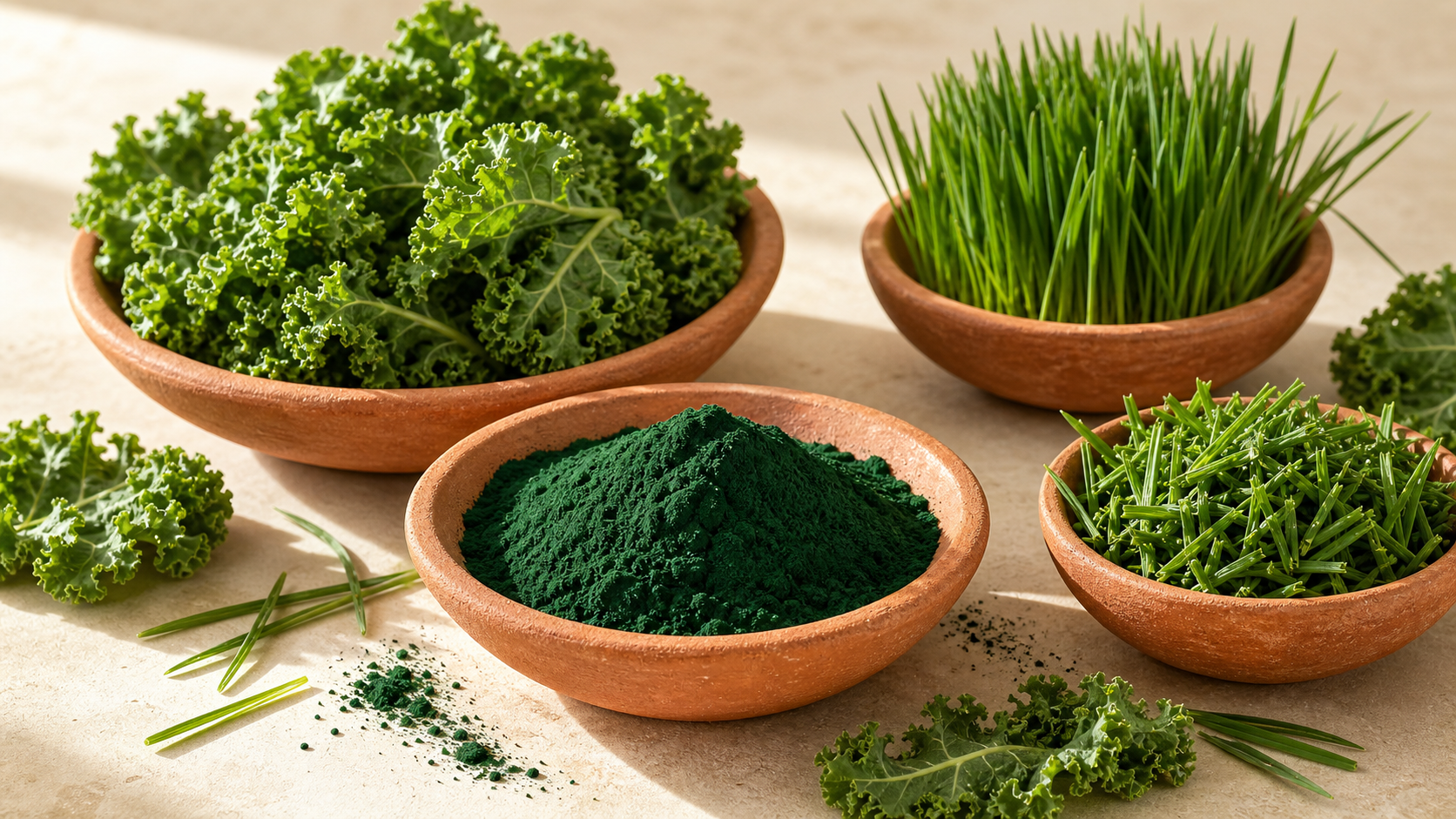
Cereal grasses such as wheatgrass and barley grass contribute plant compounds and help define the characteristic “green” profile. Algae such as spirulina and chlorella can add pigments, protein, minerals, and other compounds, although their quantities in a scoop may be modest. These ingredients are potentially useful additions, but neither category reproduces the fiber volume, water, texture, and variety found in whole vegetables.
Probiotics require closer inspection. A label should ideally identify strains, not merely species, and state a colony-forming-unit count that remains valid through the product’s expiration date. Even then, probiotic effects are strain- and condition-specific. A generic probiotic blend should not be assumed to deliver every benefit associated with the broader field of microbiome research.
Digestive enzymes can help in particular situations, such as lactase for lactose digestion. A mixture of enzymes added to a greens powder may be less consequential for a healthy person eating an ordinary meal. Likewise, prebiotic fibers may support gut microbes, but small quantities can have limited impact. People sensitive to inulin or fermentable carbohydrates may experience gas rather than relief.
Adaptogens and mushrooms deserve similar scrutiny. Ashwagandha, rhodiola, reishi, and other specialty ingredients have emerging or condition-specific evidence, yet effective amounts depend on the extract and outcome being studied. Their presence on a label does not prove the finished blend improves stress, immunity, or performance. They can also interact with medications or be unsuitable during pregnancy or for certain medical conditions.
Best Athletic Greens Alternatives by Use Case
Best broad all-in-one substitute: Huel Daily Greens
Huel Daily Greens is a logical choice for buyers who want greens, fortified nutrients, botanicals, and other functional ingredients in one routine. It competes most directly with the comprehensive philosophy behind AG1. Compare its vitamin and mineral amounts with any multivitamin you already use, because stacking fortified products can create unnecessary duplication.
Best premium targeted option: Thorne Daily Greens Plus
Thorne may suit consumers who are more interested in selected phytonutrients and botanical extracts than in maximizing the raw number of vegetable powders. It is not the cheapest substitute, but quality-conscious athletes may appreciate a company that serves clinical and sports-nutrition markets. Athletes subject to drug testing should still verify the certification attached to the exact product and lot rather than relying on general brand reputation.
Best affordable foundational powder: Amazing Grass Super Greens
Amazing Grass is a practical entry point for someone who wants recognizable grasses, algae, and produce ingredients without paying for an extensive adaptogen stack. Larger containers can produce a particularly low cost per serving. The tradeoff is that a basic blend may not replace a dedicated multivitamin or targeted probiotic when either is actually needed.
Best for flavor variety: Bloom Greens & Superfoods
Bloom can work for people whose main barrier is taste. A moderately useful powder consumed regularly is more valuable than an elaborate product abandoned after three unpleasant servings. Still, shoppers seeking the best greens supplements for nutrient coverage should examine the quantities on the label rather than allowing flavor variety or social-media popularity to decide the purchase.
Best minimalist substitute: a single-ingredient greens powder
Plain spirulina, chlorella, moringa, or wheatgrass powder gives the buyer more control and usually costs less than a branded all-in-one formula. This approach is especially sensible when a person already eats well and only wants one specific ingredient. Choose a manufacturer that provides contaminant testing, since algae and concentrated plant products can accumulate heavy metals or other unwanted substances if sourcing and processing are poor.

Pricing: Compare Cost per Serving, Not Container Price
A container’s sticker price can be misleading because serving counts and scoop weights vary substantially. Divide the purchase price by the number of full servings, then include shipping, subscription requirements, and any introductory discount that disappears after the first order. Budget powders frequently fall below roughly one dollar per serving, midrange products commonly land around one to two dollars, and premium all-in-one formulas can approach or exceed three dollars per day.
Cost also depends on what the powder prevents you from buying separately. A comprehensive formula may be economical if it genuinely replaces a multivitamin, probiotic, and several botanical supplements that you would otherwise purchase. It is poor value if you already take those products or do not need them. Conversely, a basic greens blend may look inexpensive but offer little value if your real goal is correcting a confirmed vitamin deficiency.
Subscriptions reduce the advertised daily price but introduce practical considerations. Check cancellation terms, shipment frequency, refund policies, and whether unused containers are accumulating. A 30-serving tub is not a monthly supply if you only use the product three times per week. Calculate cost according to your real behavior, not the ideal routine depicted in marketing.
What the Evidence Says About Efficacy
The evidence for individual vitamins, minerals, fibers, probiotics, and plant extracts is much stronger than the evidence for most finished greens powders. Researchers can study a specific dose of a specific substance, but those findings cannot automatically be transferred to a proprietary mixture containing a small or undisclosed amount of that substance.
Greens supplements may help fill limited nutritional gaps, particularly when they contain clearly labeled amounts of essential nutrients. Some users also find that a flavored powder encourages hydration or replaces a less nutritious morning drink. Those are credible practical benefits, although they are different from claims that a powder “detoxifies” the body or substitutes for several servings of produce.
Whole fruits and vegetables remain nutritionally distinct. They supply substantial fiber, water, food volume, and a complex physical structure that powders generally do not preserve. Eating a variety of produce is also associated with dietary patterns containing legumes, nuts, whole grains, and other beneficial foods. A scoop cannot reproduce that broader pattern.
For most healthy adults, efficacy should therefore be judged modestly: Does the product provide useful disclosed nutrients, fit safely with the rest of the diet, and support a habit the person can maintain? Claims of dramatic energy, immunity, detoxification, or disease prevention deserve skepticism unless the finished product has been tested in rigorous, independently reviewed human trials.
Safety, Quality, and Label Checks
Dietary supplements do not receive the same premarket approval as prescription drugs. Look for credible independent testing for identity and contaminants, especially when a formula includes algae, herbs, or concentrated extracts. Certifications from recognized testing organizations can reduce uncertainty, although they do not establish that a product is clinically effective.
Review added vitamin and mineral amounts alongside fortified foods and other supplements. High totals can be inappropriate for certain nutrients, and “water soluble” does not mean unlimited intake is harmless. Vitamin K can be important for people taking warfarin, while botanical extracts may interact with medicines for blood pressure, blood sugar, thyroid disease, anxiety, or immune conditions.
People who are pregnant, breastfeeding, managing chronic illness, preparing for surgery, or taking prescription medication should discuss complex formulas with a physician or pharmacist. Anyone with allergies should inspect both ingredients and facility statements. Stop using a product and seek appropriate care if it causes persistent digestive symptoms, rash, swelling, breathing difficulty, or other concerning effects.
How to Choose the Best Greens Supplement for You
Begin with a concrete goal. If you want insurance against occasional dietary gaps, choose a product with transparent vitamin and mineral amounts. If you want a convenient source of basic plant powders, a simpler and cheaper formula may be sufficient. If digestive support is the priority, look for disclosed probiotic strains, guaranteed potency, and meaningful fiber content rather than a vague “gut health” blend.
Next, eliminate products that conflict with medications, allergies, caffeine sensitivity, dietary preferences, or existing supplements. Compare price per serving and examine how much of the scoop consists of active blends. Favor labels that disclose individual quantities or at least provide useful totals for each blend. Third-party testing, accessible customer support, and clear lot information are stronger quality signals than celebrity endorsements.
Finally, consider adherence. Buy the smallest size first, test the flavor with water and smoothies, and note how you feel over several weeks without changing several other supplements simultaneously. The best greens supplements are those that are safe, financially sustainable, reasonably transparent, and useful within an already sound diet. For many people, the smartest athletic greens alternative is a modest greens powder plus ordinary food—not a different oversized proprietary blend.
Related Articles
Frequently Asked Questions
Is there a cheaper alternative to Athletic Greens with similar ingredients?
Huel Daily Greens is one of the closer broad-spectrum alternatives, while Amazing Grass provides a more affordable core of grasses, algae, and produce ingredients. No substitute matches AG1 ingredient for ingredient, and exact duplication is not necessary. Compare the nutrients and functional ingredients you want rather than total ingredient counts.
Can a greens powder replace vegetables?
No. Greens powders can supplement an inconsistent diet, but they generally lack the fiber volume, water, texture, and full food matrix of vegetables. Continue aiming for varied whole produce, including leafy greens, cruciferous vegetables, legumes, and colorful fruits. Treat the powder as a convenience product rather than a serving-for-serving replacement.
Are proprietary blends less effective?
Not automatically, but they are harder to evaluate. A proprietary blend may contain effective ingredients while withholding their individual amounts. Without those quantities, consumers cannot readily compare the formula with research-supported doses or determine whether prominent ingredients are present only in trace amounts.
How long does it take for a greens supplement to work?
There is no universal timeline because “work” can mean different things. Correcting a genuine nutrient shortfall may take weeks and should be assessed appropriately, while a change in bowel habits from added fiber may occur sooner. Claims of an immediate detox or dramatic transformation are not a realistic benchmark. If symptoms such as fatigue or digestive distress persist, seek medical evaluation instead of relying on a powder.