Lion’s Mane Supplement: Cognitive Benefits and Usage
Lion’s Mane supplements support cognitive health by enhancing memory and focus. Understand their benefits and how to use them effectively.

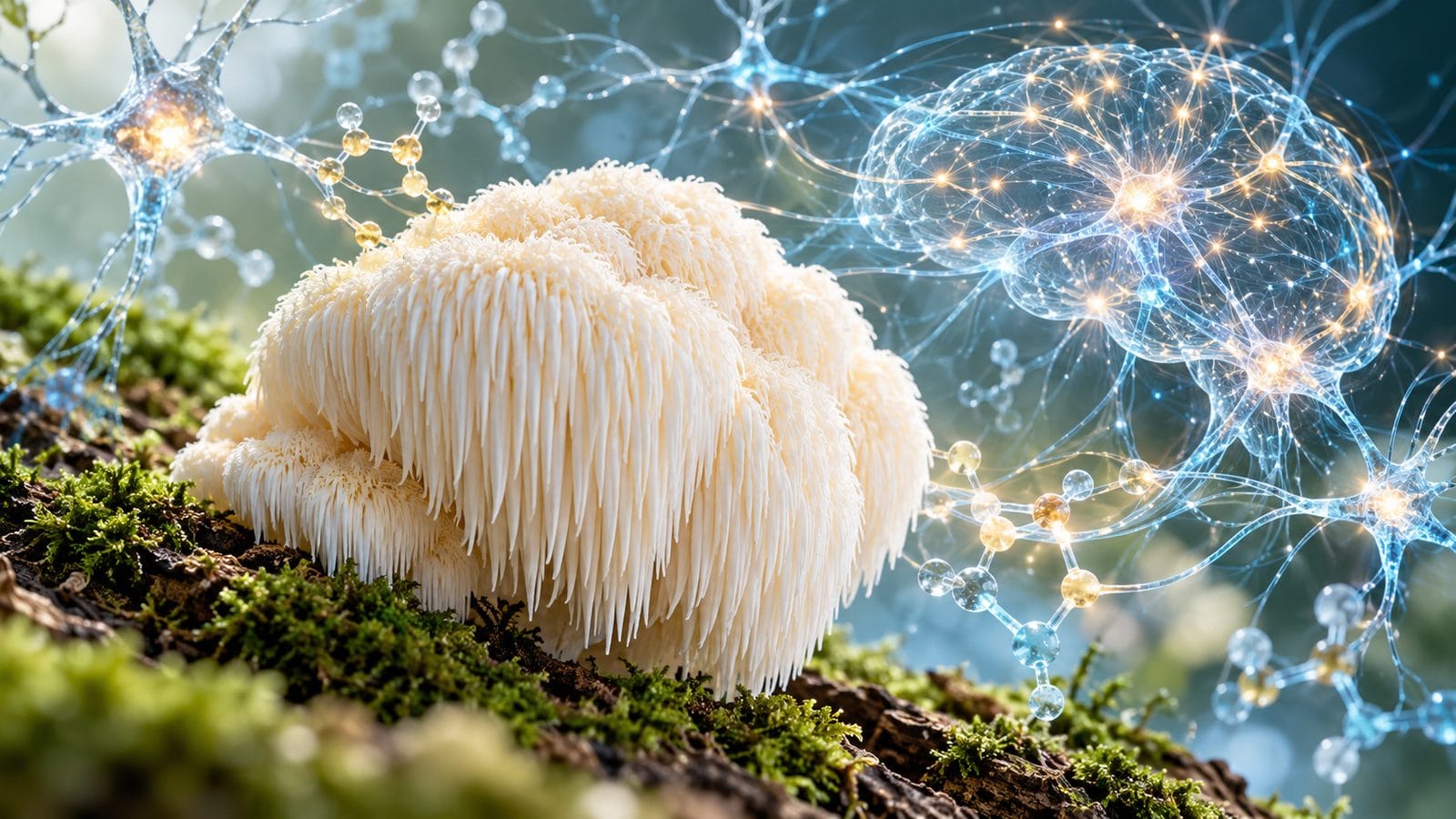
A lion’s mane supplement may support memory, attention, and long-term brain health, but it is not a proven treatment for dementia or a guaranteed cognitive enhancer. Early human trials are encouraging, particularly for people with mild cognitive impairment, while laboratory research suggests that compounds in lion’s mane may influence nerve growth, inflammation, and cellular defenses. However, the clinical evidence remains limited, products vary considerably, and the best dose has not been established. Lion’s mane is therefore best viewed as a potentially useful addition to healthy habits—not a replacement for medical care, sleep, exercise, or an adequately nutritious diet.
What Is Lion’s Mane Mushroom? | How Lion’s Mane May Affect the Brain | What Human Research Says About Cognitive Benefits | Memory, Focus, Mood, and Neuroprotection | How to Choose a Lion’s Mane Supplement | Dosage, Timing, and a Practical Trial | Safety, Side Effects, and Who Should Be Cautious | How Lion’s Mane Fits Into a Brain-Health Strategy | Frequently Asked Questions | The Bottom Line
What Is Lion’s Mane Mushroom?
Lion’s mane, scientifically known as Hericium erinaceus, is an edible mushroom native to parts of Asia, Europe, and North America. Its cascading white spines give it the shaggy appearance that inspired its common name. It has a mild, seafood-like flavor and has long been eaten as food, particularly in East Asian cuisines.
The mushroom is also sold in powders, capsules, tablets, and liquid extracts. Unlike stimulant-based brain supplements, lion’s mane does not contain caffeine and is not expected to produce an immediate surge in alertness. Interest instead centers on bioactive compounds that may affect the nervous system over time.
Two groups of compounds receive particular attention: hericenones, which are primarily associated with the mushroom’s fruiting body, and erinacines, which have been isolated mainly from cultured mycelium. The fruiting body is the visible mushroom, while mycelium is the threadlike fungal network from which it grows. These materials are chemically different, so findings from one lion’s mane preparation cannot automatically be applied to every product on the market.
Lion’s mane also contains beta-glucans and other polysaccharides that may contribute antioxidant, immune-modulating, or gut-related effects. Researchers are investigating whether these broader actions complement its proposed neurological effects, although much of this work remains preclinical.

How Lion’s Mane May Affect the Brain
The most discussed mechanism behind lion’s mane benefits is its possible influence on nerve growth factor, commonly abbreviated as NGF. NGF is a signaling protein involved in the growth, maintenance, and survival of certain neurons. Cell and animal experiments indicate that selected lion’s mane extracts or isolated compounds can promote pathways associated with neurite growth and neuronal resilience.
Some animal studies also suggest effects on brain-derived neurotrophic factor, or BDNF, another protein involved in neural plasticity, learning, and memory. These findings have fueled claims that lion’s mane can “regrow nerves,” but that wording goes well beyond the human evidence. Laboratory activity does not demonstrate that an over-the-counter supplement repairs damaged human brain tissue.
Other proposed mechanisms include moderating neuroinflammation, supporting antioxidant defenses, and protecting cells from metabolic or oxidative stress. A 2025 systematic review of preclinical research found that erinacines showed neuroprotective, anti-inflammatory, and antioxidant activity across cellular and animal models. The review also highlighted major variations in extracts, doses, experimental designs, and chemical composition.
Researchers are additionally exploring connections between lion’s mane, the gut microbiome, and the brain. Fungal polysaccharides may influence intestinal bacteria and the production of short-chain fatty acids, potentially affecting inflammatory signaling. This is a plausible research direction, but it has not yet produced a validated clinical protocol for cognitive enhancement.
The important distinction is between biological plausibility and demonstrated benefit. Lion’s mane has several plausible mechanisms, yet a mechanism alone cannot establish whether a supplement meaningfully improves everyday memory, prevents neurological disease, or works consistently across different populations.
What Human Research Says About Cognitive Benefits
Human studies of lion’s mane remain small, and they have tested different populations and preparations. The most frequently cited trial involved 30 Japanese adults between 50 and 80 years old who had mild cognitive impairment. Participants received either placebo or approximately three grams per day of lion’s mane dry powder for 16 weeks. Cognitive scores improved in the treatment group at several measurement points, but some gains diminished after supplementation stopped. The trial’s modest size means that its findings should be considered preliminary rather than definitive.
A later randomized study tested a fruiting-body supplement for 12 weeks in adults over age 50. The researchers reported improvement on one measure of global cognition, but not uniform improvement across every test. This mixed pattern is common in small nutrition studies and makes replication especially important. The study is available through the PubMed research record.
A pilot trial involving people with mild Alzheimer’s disease examined erinacine A-enriched mycelium for 49 weeks. Some cognitive and functional results favored the intervention, but the research was not large enough to establish lion’s mane as an Alzheimer’s treatment. People with memory decline should not delay evaluation or substitute a supplement for therapies recommended by a qualified clinician.
Evidence in healthy younger adults is even less certain. A 2023 double-blind pilot study gave 41 adults ages 18 to 45 either placebo or 1.8 grams of lion’s mane daily. Researchers observed faster performance on one cognitive task after an acute dose and a possible reduction in subjective stress after 28 days, but many outcomes showed no clear advantage. The authors emphasized the need for larger studies, as described in the published trial report.
Taken together, the research suggests possible benefits for selected aspects of cognition, especially in older adults experiencing mild decline. It does not prove that lion’s mane prevents dementia, raises intelligence, or produces broad improvements in healthy users. A 2025 systematic review characterized the evidence as promising while noting that clinical trials remain few and heterogeneous.
Memory, Focus, Mood, and Neuroprotection
Memory support is one of the main reasons consumers seek a lion’s mane supplement. Early trials provide a signal that regular use may modestly support global cognitive performance in some older adults. Nevertheless, “memory” is not a single ability: working memory, delayed recall, verbal learning, visual retention, and everyday functioning are separate outcomes. Current trials do not show consistent improvement across all of them.
Claims about focus and mental clarity are less secure. A person may interpret reduced stress, better sleep, or improved mood as sharper concentration even when formal attention testing does not change. Conversely, a small statistical improvement on a laboratory task may not translate into a noticeable difference at work or school. Consumers should evaluate practical outcomes rather than relying only on a product’s promise of enhanced focus.
Lion’s mane has also been studied for mood and stress. Small trials and preclinical experiments suggest possible effects on anxiety- or depression-related pathways, but the evidence is insufficient to treat a mental health condition. Persistent anxiety, depressed mood, loss of interest, or impaired functioning warrants professional assessment.
Neuroprotection is perhaps the most intriguing—and most frequently overstated—potential benefit. In experimental models, lion’s mane compounds have influenced oxidative stress, inflammatory signaling, neuronal survival, and amyloid-related processes. These findings help researchers identify questions worth testing, but they do not demonstrate prevention of Alzheimer’s disease, Parkinson’s disease, stroke, or age-related cognitive decline in humans.
Compared with many marketed cognitive enhancers, lion’s mane has an interesting biological rationale and a growing research base. Still, the evidence supports cautious optimism rather than certainty. Its potential value may lie in gradual support over weeks or months, not an immediate nootropic effect.

How to Choose a Lion’s Mane Supplement
Product selection matters because lion’s mane preparations are not interchangeable. A label should clearly identify whether the ingredient comes from the fruiting body, mycelium, or both. It should also state the amount per serving and distinguish the weight of a concentrated extract from the weight of raw mushroom material.
Fruiting-body products are often marketed for their beta-glucan and hericenone content, while standardized mycelium extracts may be selected for erinacines. Neither category is inherently superior for every purpose. What matters is whether the material has been characterized, manufactured consistently, and matched to evidence relevant to the intended use.
Some mycelium products are grown on grain and may contain substantial residual starch. Look for disclosure of beta-glucan content rather than a vague “polysaccharide” figure, because starch can inflate broad polysaccharide measurements. A company should also be able to explain its extraction process and testing standards without implying that a laboratory certificate proves clinical effectiveness.
Prefer products independently tested for identity, microbial contamination, heavy metals, and unwanted agricultural chemicals. Third-party certification can improve confidence that the contents resemble the label, although certification does not prove cognitive benefit. Avoid proprietary blends that conceal the quantity of lion’s mane or combine it with numerous stimulants and herbs, making effects and side effects difficult to trace.
Marketing language is another useful filter. Claims to cure dementia, regenerate the brain, or work instantly are warning signs. Responsible manufacturers acknowledge uncertainty and do not present animal experiments as established human outcomes.
Dosage, Timing, and a Practical Trial
There is no universally established clinical dose for lion’s mane. Human studies have used different preparations, including roughly 1 to 3 grams per day of mushroom powder and smaller amounts of concentrated or standardized extracts. These quantities are not directly equivalent because extraction ratios and concentrations vary.
Follow the serving instructions for the specific product unless a clinician recommends otherwise. A conservative approach is to begin at the lowest suggested amount, use one new supplement at a time, and increase only if the product is well tolerated. Taking it with food may reduce digestive discomfort.
Lion’s mane can generally be taken in the morning or with a midday meal. It is not a conventional stimulant, so timing should be guided by consistency and personal tolerance. Anyone who notices unusual alertness, vivid dreams, or sleep disruption should move the dose earlier or discontinue it.
A reasonable personal trial may last eight to twelve weeks because several cognitive studies evaluated continued use rather than a single dose. Before starting, choose one or two measurable goals, such as fewer forgotten appointments, improved ability to complete focused work, or a consistent score on a simple memory task. Keep sleep, caffeine intake, and other supplements as stable as practical.
Stop if meaningful adverse effects occur. If there is no noticeable benefit after a consistent trial, increasing the dose indefinitely is unlikely to be a sound strategy. More is not necessarily better, particularly when long-term high-dose safety has not been thoroughly studied.
Safety, Side Effects, and Who Should Be Cautious
Lion’s mane appears reasonably well tolerated in the small clinical studies conducted so far, but the safety database is limited. Reported or plausible adverse effects include stomach discomfort, nausea, loose stools, headache, and skin reactions. Because it is a fungus, lion’s mane may cause an allergic response, particularly in someone with a mushroom allergy.
Discontinue use and seek urgent medical care for facial swelling, breathing difficulty, widespread hives, or other signs of a serious allergic reaction. New wheezing or a persistent rash also deserves prompt medical attention.
Evidence about interactions is incomplete. People taking anticoagulant or antiplatelet medicines, diabetes medication, or immunomodulating treatment should consult a clinician or pharmacist before use. Extra caution is appropriate before surgery and for people with bleeding disorders, unstable blood sugar, severe allergies, or complex medical conditions.
Safety during pregnancy and breastfeeding has not been adequately established. Children should not receive concentrated lion’s mane supplements without guidance from a pediatric healthcare professional. The same caution applies to anyone receiving cancer treatment or care for a neurological or psychiatric condition.
A supplement should never be used to self-treat unexplained memory loss. Cognitive changes can result from medication effects, sleep apnea, thyroid disorders, vitamin deficiencies, depression, infection, substance use, or neurological disease. Early assessment can identify reversible causes and provide access to evidence-based care.
How Lion’s Mane Fits Into a Brain-Health Strategy
Even if future research confirms meaningful lion’s mane benefits, the supplement is unlikely to outweigh the foundations of cognitive health. Regular physical activity, adequate sleep, social engagement, management of blood pressure and diabetes, hearing care, and a nutrient-dense diet have broader evidence behind them.
For healthy adults, lion’s mane may be considered an optional experiment rather than an essential intervention. Set realistic expectations: subtle changes in concentration or mental fatigue are more plausible than a dramatic transformation in intelligence or memory. Benefits, if present, may vary with age, baseline cognitive status, preparation, dose, and duration.
Avoid beginning several brain supplements simultaneously. Combining lion’s mane with caffeine, stimulating herbs, or multiple cognitive enhancers makes it difficult to identify what is helping and what is causing adverse effects. A simple regimen, a defined goal, and periodic reassessment are more informative.
It is also useful to separate subjective experience from disease prevention. Feeling mentally sharper does not prove that neurons are protected or that dementia risk has fallen. Neuroprotection is a clinical claim that requires large, long-duration studies with meaningful health outcomes, and that level of evidence does not yet exist for lion’s mane.
Frequently Asked Questions
How long does lion’s mane take to work?
Lion’s mane does not have a well-established onset of action. Although isolated studies have reported changes after a single dose, most encouraging cognitive findings come from daily use over several weeks. An eight- to twelve-week trial is more consistent with the research than expecting an immediate effect. Stop earlier if adverse reactions develop.
Does lion’s mane contain caffeine or act like a stimulant?
Pure lion’s mane does not naturally contain caffeine and is not considered a conventional stimulant. It should not produce the rapid alertness associated with coffee. Some combination products add tea extracts, caffeine, or stimulating herbs, so check the complete ingredient list before use.
Can lion’s mane prevent or treat dementia?
No. Preliminary studies in mild cognitive impairment and mild Alzheimer’s disease are scientifically interesting, but they are too small to establish prevention or treatment. Lion’s mane should not replace diagnostic evaluation, prescribed medication, cognitive therapy, or management of cardiovascular and metabolic risk factors.
Is fruiting body or mycelium better for cognitive support?
There is no definitive winner. Fruiting bodies and mycelium contain different profiles of potentially active compounds, and studies have tested both. Choose a clearly identified, well-characterized preparation with independent quality testing. If a product claims standardization to a specific compound, verify that the amount is disclosed rather than implied through vague marketing language.
The Bottom Line
Lion’s mane is one of the more scientifically interesting mushroom-based brain supplements, with plausible effects on neurotrophic signaling, inflammation, and cellular protection. Small human trials suggest possible support for cognitive performance, especially in older adults with mild impairment, but the results are not strong or consistent enough to establish lion’s mane as a treatment or proven neuroprotective agent.
For adults who want to try it, the most sensible approach is to choose a transparently labeled, independently tested product, follow its dosing guidance, monitor a specific outcome, and reassess after several weeks. People with medical conditions, allergies, pregnancy, planned surgery, or regular medication use should seek professional guidance first. Lion’s mane may complement an evidence-based brain-health routine, but it cannot substitute for the habits and healthcare that protect cognition over a lifetime.