Evening Primrose Oil: Benefits, Dosage, and Usage Guide
Evening primrose oil supports skin health and hormone balance with proper dosage and usage tips to maximize its natural benefits effectively.

We include products we think are useful for our readers. If you buy through links on this page, we may earn a small commission.
Evening primrose oil is a plant-derived supplement rich in gamma-linolenic acid, an omega-6 fatty acid involved in inflammatory signaling and skin-barrier function. It is commonly used to support cyclical breast discomfort, premenstrual symptoms, menopausal well-being, and dry or irritated skin. Although some research is encouraging, results vary by condition, and evening primrose oil should complement—not replace—evidence-based medical care. Choosing a quality product, using a condition-appropriate dose, and checking for medication interactions are essential for safe use.
What Is Evening Primrose Oil? | Hormonal Support and Cyclical Symptoms | Skin Health, Dryness, and Eczema | Other Potential Evening Primrose Benefits | Dosage and How to Use Evening Primrose Oil | Safety, Side Effects, and Interactions | How to Choose a High-Quality Supplement | Frequently Asked Questions | The Bottom Line
What Is Evening Primrose Oil?
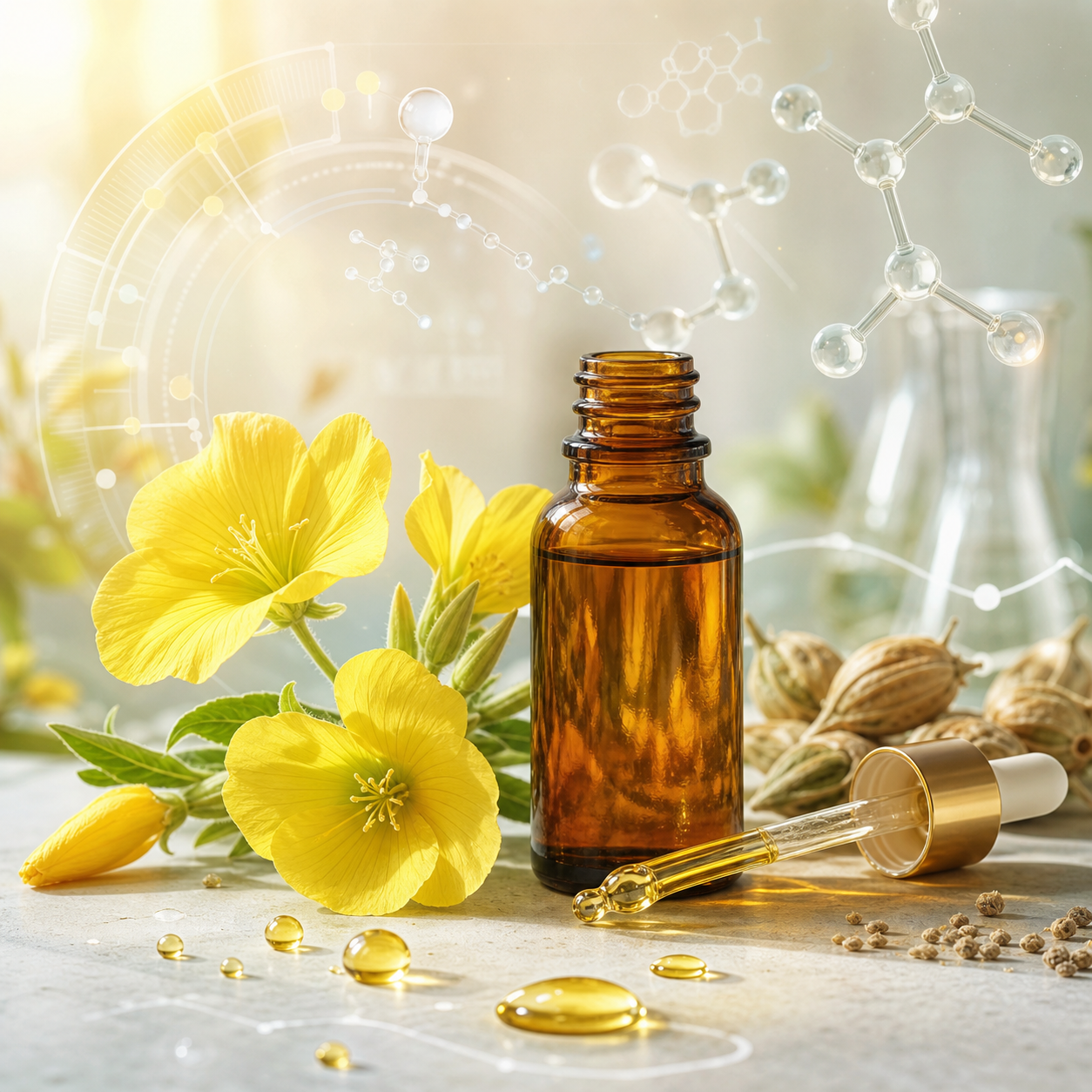
Evening primrose oil is extracted from the seeds of Oenothera biennis, a yellow-flowering plant native to North America and now cultivated in many temperate regions. Despite its name, the plant is not closely related to culinary primroses. Its flowers typically open late in the day, which inspired the “evening” portion of its common name.
The oil contains linoleic acid and a smaller but nutritionally significant amount of gamma-linolenic acid, usually abbreviated as GLA. Both are omega-6 fatty acids. Linoleic acid is common in the diet, whereas concentrated sources of GLA are relatively unusual. Besides evening primrose oil, notable sources include borage seed oil and black currant seed oil.
After ingestion, the body can convert GLA into dihomo-gamma-linolenic acid, a precursor to signaling compounds that help regulate inflammatory activity. This pathway provides the biological rationale for many proposed evening primrose benefits. However, a plausible mechanism does not guarantee a meaningful clinical effect. Absorption, metabolism, health status, dose, and study design can all influence outcomes.
Commercial products are sold as softgel capsules, bottled oil, and topical preparations. Capsules are generally the easiest form to dose consistently and protect from oxidation. Bottled oil offers flexibility but must be measured carefully and stored away from heat and light. Topical products may moisturize the skin, although they are not interchangeable with oral supplements in clinical research.
Hormonal Support and Cyclical Symptoms
Evening primrose oil is frequently marketed alongside hormonal health supplements, but it is important to understand what “hormonal support” means in this context. The oil is not a hormone, and there is no strong evidence that it directly raises or lowers estrogen, progesterone, or testosterone. Its potential value is more likely related to fatty-acid metabolism and the production of signaling molecules that influence inflammation and tissue sensitivity.
One of its best-known uses is cyclical mastalgia, or breast discomfort that appears predictably before menstruation. Clinical findings are mixed: some trials and clinical experience suggest reduced tenderness or pain after several cycles, while systematic reviews have not consistently found a clear advantage over placebo or other treatments. Because breast pain can have many causes, new, persistent, one-sided, or otherwise unusual discomfort should be medically evaluated before self-treatment.
People also take evening primrose oil for premenstrual syndrome, including irritability, bloating, and cyclical discomfort. Research has not established it as a consistently effective treatment for the full range of PMS symptoms. A trial may still be reasonable for an appropriate user who understands the uncertainty, especially when symptoms are mild and tracked carefully. Lifestyle measures, sleep, exercise, dietary patterns, and clinician-recommended therapies may offer more predictable benefits.
Evening primrose oil is sometimes promoted for menopausal hot flashes. A few studies have reported changes in severity or duration, but the overall evidence remains limited and inconsistent. It should not be presented as a proven substitute for menopausal hormone therapy or established nonhormonal treatments. Anyone experiencing disruptive symptoms should discuss the complete range of options with a qualified clinician.
The practical lesson is that evening primrose oil may help selected cyclical symptoms, but it is not a universal “hormone balancer.” Claims that it detoxifies estrogen, corrects all hormonal imbalances, or treats endocrine disorders exceed the evidence. Conditions such as thyroid disease, polycystic ovary syndrome, endometriosis, and abnormal bleeding require individualized medical assessment.

Skin Health, Dryness, and Eczema
GLA contributes to lipids that support the skin’s barrier, which helps limit water loss and protect against environmental irritants. This has made evening primrose oil a popular ingredient in herbal supplements and topical products for dry, sensitive, or reactive skin. Small studies have reported improvements in measures such as moisture, elasticity, roughness, or barrier function, but these findings are not uniform enough to promise a visible result for every user.
Atopic dermatitis, commonly called eczema, is another frequently advertised use. Earlier theories proposed that some people with eczema might process essential fatty acids differently and therefore benefit from supplemental GLA. Larger evidence reviews, however, have generally not found convincing improvement in eczema severity compared with placebo. Evening primrose oil should not replace moisturizers, trigger management, prescription topical medicines, or other clinician-directed care.
Topical evening primrose oil acts primarily as an emollient. It can soften dry areas and reduce the sensation of tightness, much like other plant oils. It does not necessarily deliver the same systemic effects studied with oral supplementation. Fragrances, preservatives, and other ingredients in a finished cosmetic may also affect tolerability.
Before applying a new topical product widely, test a small amount on a limited area for several days. Stop if burning, swelling, itching, or a worsening rash develops. People with severe eczema, open or infected skin, or known plant allergies should seek professional guidance rather than experimenting with concentrated oils.
Other Potential Evening Primrose Benefits
Evening primrose oil has been investigated for several conditions beyond hormonal and skin concerns. These proposed uses often appear on supplement labels, but many rest on preliminary, conflicting, or outdated evidence. Understanding the difference between traditional use, biological plausibility, and demonstrated clinical benefit can prevent unrealistic expectations.
In rheumatoid arthritis, GLA-containing oils have sometimes reduced pain, stiffness, or reliance on anti-inflammatory medication after prolonged use. The evidence is limited, and effective amounts of GLA may be higher than those provided by ordinary evening primrose capsules. Rheumatoid arthritis can progressively damage joints, so a supplement should never delay disease-modifying treatment or replace rheumatology care.
Evening primrose oil is also promoted for diabetic neuropathy, attention-related symptoms, acne, fertility, labor preparation, and cardiovascular health. Current evidence does not support routine use for these purposes. In particular, using the oil to induce or prepare for labor without obstetric supervision is inappropriate because safety and effectiveness are uncertain.
For acne, the fatty-acid content may theoretically support the skin barrier, but evening primrose oil is not an established acne therapy. Proven options such as benzoyl peroxide, topical retinoids, azelaic acid, and prescription treatments have stronger clinical foundations. Anyone considering supplements for persistent acne should also account for possible medication interactions and the risk of delaying effective care.
Marketing language can make a broad list of possible benefits sound definitive. A more accurate interpretation is that the oil contains a biologically active nutrient with condition-specific research, not that it treats inflammation everywhere in the body. The most responsible approach is to identify one measurable goal, select a sensible trial period, and discontinue the product if no meaningful improvement occurs.
Dosage and How to Use Evening Primrose Oil
There is no single standardized dose for all uses. Research has employed widely varying products and amounts, and labels may list either total evening primrose oil or the actual GLA content. Those figures are not equivalent. A 1,000-milligram capsule of oil may provide roughly 80 to 100 milligrams of GLA, depending on the formulation. Always inspect the supplement facts panel rather than comparing products by capsule size alone.
For general adult supplementation, manufacturers commonly suggest approximately 500 to 1,300 milligrams of oil once or twice daily. Studies of specific symptoms have sometimes used different totals. Because evidence and preparations vary, the label dosage or a clinician’s recommendation should take priority over a generic internet range. Taking capsules with food may reduce nausea, reflux, or stomach discomfort.
Benefits, when they occur, may take several weeks or menstrual cycles to become apparent. For a symptom such as cyclical discomfort, record severity, timing, other treatments, and relevant lifestyle factors before and during use. This makes it easier to distinguish a genuine effect from normal month-to-month variation. Do not indefinitely continue an ineffective supplement simply because it is plant-derived.
For topical use, follow the finished product’s directions. Pure oil can be applied sparingly to intact skin, but more is not necessarily better. Oils may stain fabric, feel occlusive, or aggravate certain skin conditions. Avoid contact with the eyes and discontinue use if irritation occurs.
Store evening primrose oil in a cool, dark location with the container tightly closed. Polyunsaturated oils are vulnerable to oxidation, which can produce an unpleasant or paint-like odor. Follow refrigeration instructions when supplied, and discard products that smell rancid or have passed their expiration date.
Safety, Side Effects, and Interactions
Evening primrose oil is generally well tolerated by healthy adults when used for a limited period at label-directed doses. The most commonly reported adverse effects are mild digestive symptoms, including nausea, loose stools, abdominal discomfort, and headache. Starting at the lower end of the recommended range and taking the product with a meal may improve tolerance.
People who take anticoagulant or antiplatelet medicines should consult a clinician before use because the supplement may theoretically increase bleeding risk. The same caution applies to people with bleeding disorders and those preparing for surgery or dental procedures. A surgical team may recommend stopping nonessential supplements in advance, but the timing should be individualized rather than guessed.
There have been concerns that evening primrose oil could lower the seizure threshold, particularly in people with epilepsy or those taking certain antipsychotic or seizure-related medicines. The quality of evidence behind this warning is debated, yet caution remains prudent. Anyone with a seizure disorder should avoid self-prescribing it and seek advice from a pharmacist, neurologist, or other qualified professional.
Safety during pregnancy and breastfeeding is not sufficiently established for routine unsupervised use. Pregnant individuals should not use evening primrose oil for cervical ripening or labor preparation unless their obstetric clinician specifically recommends and monitors it. Children and adolescents also require professional dosing guidance, since adult supplement directions may not be appropriate.
Seek prompt medical attention for signs of a severe allergic reaction, such as widespread hives, facial swelling, breathing difficulty, or faintness. Stop the supplement and contact a healthcare professional if unusual bruising, persistent gastrointestinal symptoms, neurological changes, or worsening of the condition being treated occurs.
How to Choose a High-Quality Supplement
Dietary supplement quality can vary substantially. Look for a product that clearly identifies Oenothera biennis, states the total oil amount and GLA content per serving, provides an expiration date, and lists all inactive ingredients. Avoid proprietary blends that conceal the amount of the primary ingredient.
Independent testing is valuable because it can verify identity, potency, and limits on contaminants. Certification does not prove that the supplement works for a particular condition, but it provides greater confidence that the contents match the label. Packaging in opaque or dark containers can also help protect the oxidation-sensitive oil.
“Cold-pressed” and “hexane-free” are common marketing terms. They may describe manufacturing preferences, but they do not automatically establish clinical superiority. More useful indicators include transparent sourcing, batch testing, responsible storage, and a declared GLA concentration. Be skeptical of products promising rapid hormone correction, guaranteed pain relief, or cures for multiple unrelated diseases.
Review the entire ingredient list if you have allergies or dietary restrictions. Softgel shells may contain gelatin, and formulas can include soy, coloring agents, flavorings, or other herbal supplements. A pharmacist can help compare products and identify interactions, especially when several medications or hormonal health supplements are used together.
Related Articles
- Liver Supplements: Supporting Detox and Liver Health
- Fluxactive Complete: Benefits and Consumer Insights
- Best Whey Protein Powders: Types, Benefits, and Top Brands
- Lion’s Mane Supplement: Cognitive Benefits and Usage
Frequently Asked Questions
How long does evening primrose oil take to work?
If evening primrose oil helps, the effect is usually gradual rather than immediate. Skin or cyclical symptoms may require several weeks to two or three menstrual cycles of consistent use. Set a defined review point with measurable goals. If there is no worthwhile improvement after an appropriate trial, continuing it is unlikely to provide good value.
Can evening primrose oil balance hormones?
Evening primrose oil does not directly “balance” reproductive hormones in a medically defined way. Its GLA content may influence inflammatory signaling and tissue responses, which could affect certain cyclical symptoms. It should not be used to diagnose or treat an endocrine disorder, irregular bleeding, infertility, or severe menopausal symptoms without clinical evaluation.
Is it better to take evening primrose oil in the morning or at night?
No strong evidence shows that one time of day is more effective. Consistency and tolerability matter more. Take it with a meal if it causes stomach upset, and divide the daily amount when directed by the label or a clinician. Choosing a regular meal can make the supplement easier to remember.
Can evening primrose oil be taken with other supplements?
It can sometimes be combined with other products, but compatibility depends on the ingredients, doses, medications, and medical conditions involved. Combining several oils or GLA products can unintentionally raise the total dose, while mixtures marketed for hormonal health may contain herbs with separate interactions. Bring a complete medication and supplement list to a pharmacist or clinician before starting a multi-ingredient regimen.
The Bottom Line
Evening primrose oil is a concentrated source of GLA with plausible roles in inflammatory regulation and skin-barrier support. The most discussed evening primrose benefits involve cyclical breast discomfort, PMS-related concerns, menopausal symptoms, dry skin, and inflammatory conditions, but clinical evidence ranges from mixed to insufficient. It is best viewed as an optional, goal-directed supplement rather than a comprehensive treatment for hormonal imbalance or chronic disease.
A sensible approach is to choose a transparent, independently tested product; confirm the amount of GLA; follow label or professional dosing guidance; and track one specific outcome for a limited period. People who are pregnant, preparing for surgery, managing seizures or bleeding disorders, or taking prescription medicines should obtain individualized advice first. Used with realistic expectations and appropriate safeguards, evening primrose oil may be a useful addition to a broader health plan for some individuals.