Fairlife Protein Drink: Nutritional Review and Benefits
Fairlife Protein Drink offers a high-protein, low-sugar option packed with essential nutrients to support muscle recovery and daily energy needs.

We include products we think are useful for our readers. If you buy through links on this page, we may earn a small commission.
A Fairlife protein drink is a convenient, lactose-free dairy beverage that delivers 26 to 42 grams of complete milk protein per bottle, depending on the product. Its main advantages are a high protein-to-calorie ratio, a smooth texture, low sugar in certain varieties, and portability for post-workout recovery or appetite management. Fairlife protein benefits are most meaningful when the drink helps someone meet an appropriate daily protein target; it is not inherently superior to a balanced meal, and its dairy proteins, sweeteners, price, and relatively low fiber content will not suit everyone.
What Is a Fairlife Protein Drink? | Fairlife Nutrition: Comparing the Main Product Lines | How the Protein May Support Muscle Recovery | Fairlife Protein Benefits for Weight Management | Ingredients, Sweeteners, and Digestive Considerations | Taste, Texture, Convenience, and Consumer Reviews | Who Should Choose Nutrition Plan, Core Power, or Elite? | Overall Verdict | Frequently Asked Questions
What Is a Fairlife Protein Drink?
Fairlife makes several ready-to-drink beverages under its Nutrition Plan and Core Power lines. Although shoppers often call all of them “Fairlife protein shakes,” the products serve somewhat different purposes. Nutrition Plan emphasizes concentrated protein with relatively few calories and little sugar. Core Power is positioned more directly as a sports-recovery beverage, while Core Power Elite supplies the largest protein dose.
Unlike many shakes made by blending protein powder with water, these drinks begin with cow’s milk. Fairlife uses ultrafiltration to separate and concentrate components naturally present in milk. This process raises the proportion of protein while reducing some of the sugar. The beverages still contain milk-derived whey and casein proteins, providing all nine essential amino acids. Lactase is added to break down lactose, which makes the finished products lactose-free.
The distinction between lactose-free and dairy-free is important. A Fairlife protein drink still contains cow’s-milk proteins and is unsuitable for anyone with a milk allergy. People who avoid animal products will also need a plant-based alternative. Those with lactose intolerance, however, may find Fairlife easier to digest than an ordinary milk-based shake.
Fairlife Nutrition: Comparing the Main Product Lines
Fairlife nutrition varies by product, flavor, bottle size, and country. Labels and formulations can also change, so the package in hand should always be the final authority. The following figures summarize commonly sold North American versions and provide a practical starting point for comparison.
| Product | Typical bottle size | Protein | Calories | Sugar | Best suited to |
|---|---|---|---|---|---|
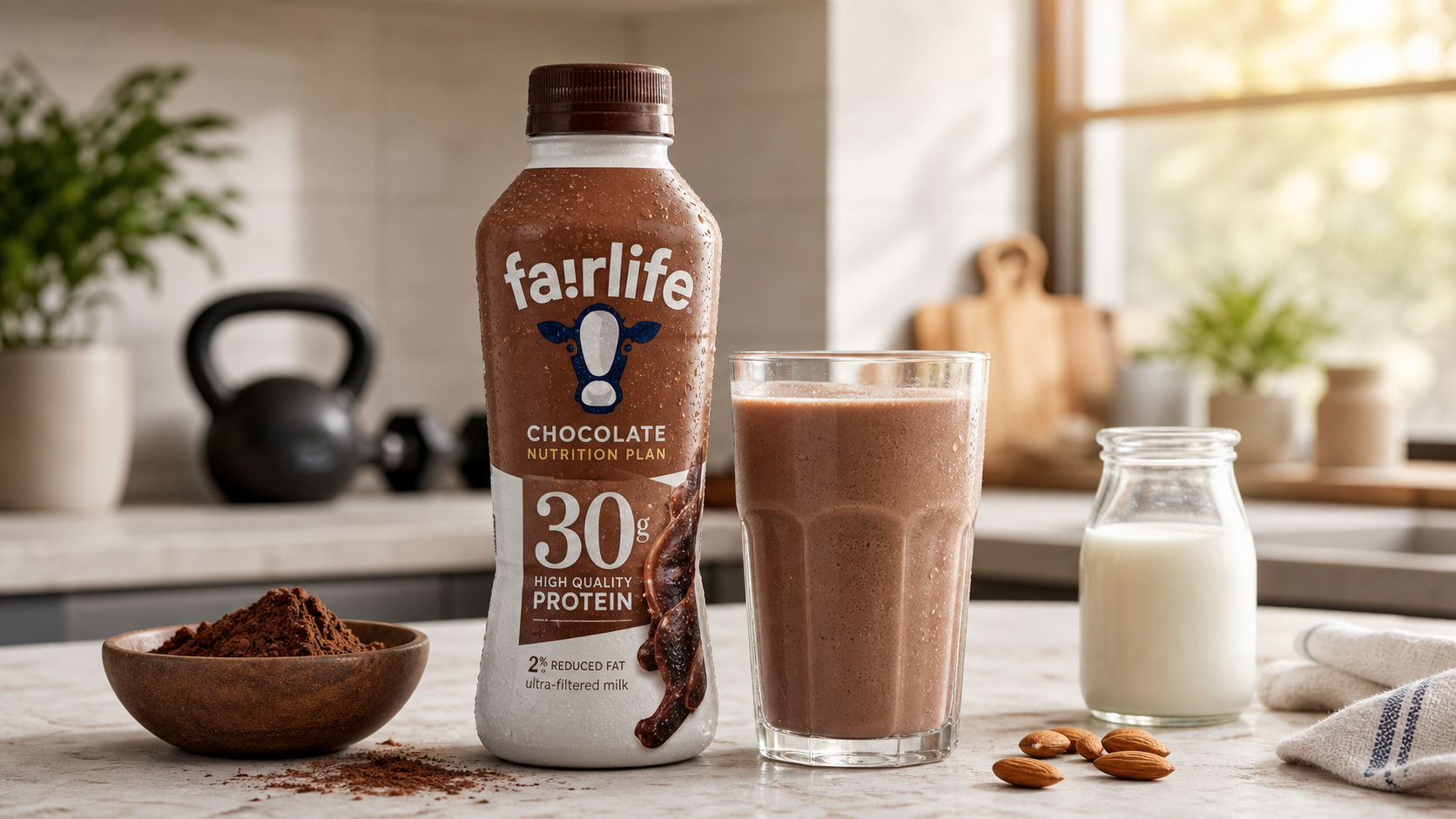
| Fairlife Nutrition Plan | 11.5 fluid ounces | 30 grams | 150 | 2 grams | High-protein snacks and calorie-conscious eating plans |
| Fairlife Core Power | 14 fluid ounces | 26 grams | About 170 | Varies by flavor and market | Everyday exercise recovery |
| Fairlife Core Power Elite | 14 fluid ounces | 42 grams | About 230 | Varies by flavor and market | People with higher protein requirements |
Nutrition Plan has the strongest protein-to-calorie ratio of the three mainstream options: 30 grams of protein for 150 calories, with 2 grams of sugar. For context, the U.S. Food and Drug Administration uses 50 grams as the Daily Value for protein on food labels. That does not mean every adult should consume exactly 50 grams, but it illustrates that one bottle contributes a substantial amount.
Core Power provides slightly less protein than Nutrition Plan despite having more liquid and, commonly, more calories. Its larger serving can feel more like a conventional flavored-milk drink. Core Power Elite delivers 42 grams, an amount that may be useful for a larger athlete, a person eating fewer protein-rich meals, or someone following individualized advice from a dietitian. For many recreational exercisers, however, the Elite dose may be more than is needed at one sitting.
Milk also naturally contributes minerals such as calcium, phosphorus, and potassium. Exact amounts vary, as do sodium, fat, carbohydrate, vitamin D, and added-sugar values. Comparing only the protein number can therefore miss meaningful differences. Someone monitoring blood pressure may prioritize sodium, while a person managing diabetes may focus on total carbohydrate and sweeteners. A shopper seeking a true meal replacement should also examine fiber, vitamins, minerals, and overall energy rather than assuming that “high protein” means nutritionally complete.
How the Protein May Support Muscle Recovery
Resistance training creates a stimulus that encourages muscle tissue to adapt. Dietary protein supplies the amino acids needed for repairing and building that tissue. Because Fairlife beverages contain both whey and casein, they provide complete, highly digestible protein. Whey is digested relatively quickly, while casein is generally processed more gradually; together, they offer a useful amino-acid supply after exercise.
A typical 26- or 30-gram bottle falls within the range commonly used in research and sports-nutrition practice for a protein-rich meal or recovery feeding. Yet the popular idea of a tiny “anabolic window” is overstated. Drinking a shake immediately after the final repetition is not mandatory. Total daily protein, adequate energy intake, progressive training, and distributing protein across the day matter more than consuming a bottle at one exact minute.
Core Power Elite’s 42 grams can make sense when individual needs are high, when the preceding meal was low in protein, or when a long gap before the next meal is expected. A smaller person who already eats protein at breakfast, lunch, and dinner may obtain no special advantage from choosing 42 grams instead of 26 or 30. The body can digest the larger amount, but the muscle-building response to a single serving is not unlimited.
A Fairlife protein drink can also be paired with carbohydrate after long or demanding exercise. The drink itself may not supply enough carbohydrate to replenish energy after an extended endurance session. Adding a banana, oats, whole-grain toast, or another carbohydrate source produces a more complete recovery snack. Fluids, sleep, rest days, and sufficient total calories remain essential parts of recovery as well.
Fairlife Protein Benefits for Weight Management
Protein tends to be more satiating than an equal amount of carbohydrate or fat, and systematic reviews suggest that higher-protein eating patterns can improve fullness for some people. This creates one of the most practical Fairlife protein benefits: a 150-calorie Nutrition Plan shake may be more satisfying than a similarly caloric sugary drink or low-protein snack.
That advantage depends on substitution. Adding a shake to an unchanged diet increases energy intake and could contribute to weight gain. Replacing a higher-calorie snack or using the drink to prevent impulsive eating may support a calorie deficit. No protein drink directly burns body fat, and weight change still reflects the broader pattern of energy intake, activity, sleep, medications, health status, and behavior.
Protein is also valuable during weight loss because adequate intake, combined with resistance exercise, helps support lean mass. Preserving muscle is generally preferable to losing both fat and muscle. A ready-to-drink bottle can make that target easier to reach when appetite is low or meal preparation is inconvenient.
Liquid calories have an important limitation: some people find solid food more filling because it takes longer to eat and offers greater volume and texture. Fairlife drinks also contain little or no dietary fiber, depending on the formula. Fiber-rich foods support fullness, digestive health, and a more varied gut microbiome. For a better-balanced snack, the shake can be combined with berries, an apple, vegetables, nuts, or a modest serving of whole grains.
Using a Fairlife protein drink as an occasional light breakfast may be practical, but the drink alone is not necessarily a complete meal. Most bottles provide fewer calories, less fiber, and less food variety than many adults require from a main meal. Habitually replacing meals without professional guidance can crowd out fruits, vegetables, legumes, whole grains, and healthy fats.
Ingredients, Sweeteners, and Digestive Considerations
The exact ingredient list depends on the flavor and line, but Fairlife shakes typically contain ultrafiltered low-fat milk, flavoring ingredients, lactase, stabilizers, and non-nutritive sweeteners. Some versions use sucralose and acesulfame potassium to create sweetness without the sugar and calories found in a conventional milkshake. These sweeteners are permitted for use within established regulatory limits, but preference and tolerance differ from person to person.
For many consumers, the sweetener system helps deliver an unusually dessert-like taste with favorable macronutrients. Others notice an aftertaste or prefer foods without non-nutritive sweeteners. A low number in the sugar row should therefore be considered alongside the full ingredient list rather than treated as the only marker of quality.
Stabilizers help keep the milk proteins suspended and produce a consistent texture during shelf storage. Some people report bloating or discomfort with particular processed shakes, although a reaction cannot automatically be attributed to one additive. Trying a partial serving and monitoring symptoms is sensible for someone with a sensitive digestive system.
Lactose-free status does not guarantee that every person with digestive symptoms will tolerate the product. Milk protein, fat level, sweeteners, serving size, and an individual gastrointestinal condition can all affect comfort. Anyone with a diagnosed cow’s-milk allergy should avoid Fairlife entirely unless an allergy specialist says otherwise. People with kidney disease, certain metabolic disorders, or medically prescribed protein limits should ask a qualified clinician before adopting a high-protein routine.
Taste, Texture, Convenience, and Consumer Reviews
Consumer feedback commonly identifies taste and texture as Fairlife’s strongest qualities. Many reviewers describe the chocolate varieties as rich, creamy, and closer to flavored milk than to a chalky powdered supplement. The ultrafiltered-milk base helps explain why the texture differs from shakes mixed from dry powder. Vanilla and strawberry preferences are more variable, as sweetness and aftertaste are highly subjective.
The negative comments are fairly consistent as well. Some consumers find the drinks overly sweet, detect an artificial-sweetener finish, or notice a thick film near the cap after storage. Shaking the bottle well and serving it cold may improve the experience, but a damaged, swollen, leaking, foul-smelling, or unusually clumped product should not be consumed. Follow the storage instructions and use-by date printed on the bottle.
Convenience is a major part of the appeal. The sealed bottles require no blender, scoop, refrigeration before opening when sold as shelf-stable products, or cleanup. They can fit into a work bag, gym routine, road trip, or emergency snack supply. Once opened, however, the beverage should be refrigerated and used promptly according to label directions.
Price is the most frequent practical drawback. Ready-to-drink shakes generally cost more per gram of protein than milk, Greek yogurt, eggs, canned fish, beans, or protein powder purchased in bulk. Availability and case pricing fluctuate considerably among warehouse clubs, supermarkets, convenience stores, and online sellers. The value proposition is strongest for someone who will genuinely use the portability; it is weaker for a person who can easily prepare a less expensive snack at home.
Online reviews are useful for identifying recurring themes, but they are not controlled scientific evidence. Taste ratings can also be influenced by flavor, batch, serving temperature, price, and expectations. The broad consumer verdict is that Fairlife performs especially well on smoothness and protein density, while cost, sweetness, packaging residue, and reliance on processed ingredients are the most common reservations.
Who Should Choose Nutrition Plan, Core Power, or Elite?
Fairlife Nutrition Plan is usually the most logical choice for someone seeking maximum protein with minimal calories and sugar. Its 30 grams of protein and 150 calories work well as a substantial snack, a quick breakfast component, or a convenient way to fill a protein gap. It is less appropriate as a stand-alone meal unless the person’s plan specifically accounts for its limited energy and fiber.
Standard Core Power is a sensible post-exercise option for the average recreational athlete. Its 26 grams of protein are enough to make a meaningful contribution to recovery, and the larger bottle may feel more satisfying as a beverage. The choice between Core Power and Nutrition Plan often comes down to flavor, texture, availability, and the rest of the day’s diet rather than a dramatic nutritional difference.
Core Power Elite is designed for higher protein demands. It can be useful for larger athletes, people doing substantial resistance training, older adults struggling to consume enough protein, or individuals following a clinician-designed nutrition plan. It is not automatically “better” because the number is larger. Protein needs are individual, and routinely consuming more than required can displace other important foods without improving results.
Before buying, estimate how much protein already comes from meals. A healthy adult’s baseline requirement is often expressed as approximately 0.8 grams per kilogram of body weight per day, although athletes, older adults, people losing weight, and those recovering from illness may need more under individualized guidance. A registered dietitian can translate body size, training, health conditions, and goals into a suitable target.
Overall Verdict
The strongest feature of a Fairlife protein drink is nutritional efficiency. Nutrition Plan supplies 30 grams of complete protein for about 150 calories, while Core Power and Elite provide convenient options for moderate and high post-exercise protein needs. The lactose-free formulation, smooth milk-based texture, portability, and generally low sugar content distinguish these drinks in a crowded market.
The trade-offs are equally clear. Fairlife remains a dairy product, often contains non-nutritive sweeteners and stabilizers, contributes little fiber, and can be expensive compared with ordinary food or protein powder. It should complement rather than replace a varied diet rich in minimally processed protein sources, produce, whole grains, legumes, and healthy fats.
For a lactose-intolerant consumer who wants an easy, high-protein snack, the product can be an excellent fit. For someone with a milk allergy, a dislike of sweeteners, a tight budget, or no difficulty meeting protein needs through food, it may offer little benefit. The most useful Fairlife nutrition comparison is not simply between bottle sizes; it is between the drink and the food or beverage it will replace.
Related Articles
- Whey Isolate Protein Powder: Benefits, Uses, and Top Brands
- Garden of Life Protein: Natural and Organic Protein Options
- Ghost Protein Powder: Flavors, Benefits, and User Reviews
- Best Plant Based Protein Powders for Optimal Health
Frequently Asked Questions
Is a Fairlife protein drink good for you?
It can be a nutritious and convenient source of complete protein, calcium, and other milk-derived nutrients. Whether it is “good” for a particular person depends on total diet, protein needs, allergies, medical conditions, and what the shake replaces. It should not be viewed as a substitute for dietary variety.
Is Fairlife protein drink lactose-free?
Yes, Fairlife’s major protein-drink lines are labeled lactose-free because lactase breaks down the lactose. They are not dairy-free, however. The beverages contain cow’s-milk proteins and are unsafe for people with a milk allergy unless a qualified allergy specialist advises otherwise.
Is Fairlife good for weight loss?
Fairlife may support weight management by providing substantial protein for relatively few calories, which can improve fullness and help preserve lean mass when paired with resistance training. It causes weight loss only if it fits within an appropriate overall eating pattern. Adding it on top of existing meals without adjusting energy intake will not produce fat loss.
Should I drink Fairlife before or after a workout?
Either timing can work. After training, the milk protein supplies amino acids used in muscle repair. Before training, it can provide protein when the previous meal was several hours earlier, although people sensitive to dairy beverages may prefer not to drink it immediately before intense exercise. Meeting daily protein needs and eating protein across several meals are generally more important than exact timing.